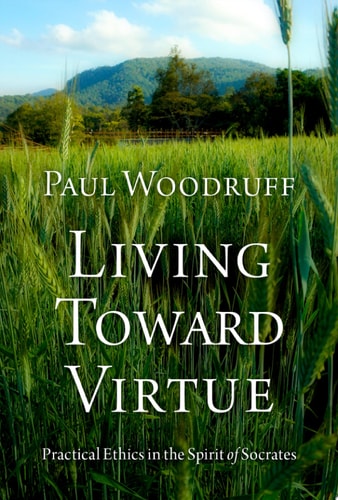
Living Toward Virtue: Practical Ethics in the Spirit of Socrates
0
0
As an Amazon Associate and affiliate partner, Menrva Books earns from qualifying purchases. Learn more
Author Description
In Living toward Virtue, Paul Woodruff shows how we can set about living ethically through self-questioning, which enables us to avoid moral injury by getting clear about what we are doing and why we are doing it. Self-questioning also helps us recognize the limits of our knowledge and so to avoid the danger of self-righteousness. Using real-life examples, Woodruff shows how we can nurture our souls, enjoy a virtuous happiness, and avoid moral injury as much as possible.This is in the spirit of Socrates, who urged everyone to commit to a lifelong activity of self-examination. By contrast, modern philosophers who follow Aristotle in ethics have mostly taught that living well depends on having virtues that are robust traits of character. Traits are not reliable in all situations, however, and they do not help us make hard decisions. Having a trait is no substitute for the activity we need to practice in order to live toward virtue.Written for anyone interested in answers to ancient questions about how to live ethically, as well as those engaged with current debates, Living Toward Virtue represents the culmination of decades of scholarship by one of its most distinguished figures.
Menrva's Summary
THE THESIS
This book investigates whether the Socratic method of constant self-questioning serves as a more reliable foundation for ethical living than the Aristotelian focus on fixed character traits. Paul Woodruff, a distinguished scholar of ancient philosophy, argues that relying on static virtues often fails in complex, real-world scenarios. By drawing on decades of research, he proposes that active, ongoing self-examination is the only way to avoid moral injury and maintain intellectual humility in modern life.
THE SCOPE MAP
What You Will Find
- A comparative analysis between Socratic self-questioning and Aristotelian character-based ethics.
- Practical methodologies for applying ancient philosophical inquiry to contemporary moral dilemmas.
- Case studies illustrating the dangers of self-righteousness and the benefits of recognizing the limits of one's knowledge.
- A framework for nurturing the soul to achieve a state of virtuous happiness.
THE AUTHORITY PERSPECTIVE
Experts recognize this work as a significant synthesis of Woodruff's long-standing scholarship on ancient ethics. Readers frequently note the accessibility of the prose, which successfully bridges the gap between academic philosophy and practical, everyday application.
Page Count:
248
Publication Date:
2022-12-13
Publisher:
Oxford University Press
ISBN-10:
0197672124
ISBN-13:
9780197672129
Philosophy
Self-help
Non-Fiction
History & Surveys
Ethics
Community Tags
Similar Books