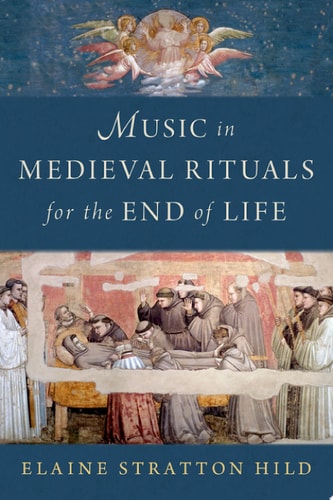
Music in Medieval Rituals for the End of Life
0
0
As an Amazon Associate and affiliate partner, Menrva Books earns from qualifying purchases. Learn more
Author Description
For centuries of European history, singing for a person at the moment of death was considered to be the ideal accompaniment to a life's ending. In Music in Medieval Rituals for the End of Life, author Elaine Stratton Hild examines and recovers the chants sung for the dying during the Middle Ages, beginning in the late eighth century. Along with the first editions of these melodies, she offers considerations of the functions that music played within the deathbed rituals, arguing that the chants served as vehicles with which communities offered comfort to a dying person.The book presents close readings of rituals from diverse communities, each as they appear in a single source. The rituals' chants are transcribed into modern notation and analyzed, both for their text-music relationships and for their functions within the rituals. Hild shows that within the widespread practice, local versions of the liturgies--along with their chant repertories--remained unstandardized throughout the Middle Ages. Yet some commonalities are evident among these varied local practices. One is the use of song. Beginning in the ninth century, sources most often prescribe chant, not the Eucharist, for the final moments of life. Another commonality is the positive depiction of the afterlife conveyed by the chants.Created for the powerful and the poor, the educated and the uneducated, women and men, monastics, clerics, and laity, these manuscripts offer a glimpse into the religious practices that distinguished communities from one another and also bound them together within a single tradition.
Menrva's Summary
THE THESIS
This book investigates the historical function and liturgical significance of chants performed during deathbed rituals in medieval Europe. Elaine Stratton Hild utilizes a rigorous musicological approach to examine primary source manuscripts from the late eighth century onward, arguing that these musical performances served as essential communal vehicles for providing comfort and spiritual transition to the dying. By analyzing the intersection of text and melody, the author demonstrates how these unstandardized local practices reflected broader religious traditions while maintaining distinct regional identities.
THE SCOPE MAP
What You Will Find
- Transcriptions of medieval deathbed chants into modern musical notation.
- Comparative analysis of liturgical rituals across diverse European communities.
- Examination of the relationship between text and music in medieval funerary practice.
- Evidence regarding the social inclusivity of deathbed rituals across different classes and genders.
THE AUTHORITY PERSPECTIVE
Scholars and musicologists recognize this work as a significant contribution to the study of medieval liturgy and the history of death. Readers frequently note the meticulous nature of the transcriptions and the clarity with which the author navigates complex, unstandardized historical sources.
Page Count:
240
Publication Date:
2024-01-01
Publisher:
Oxford University Press
ISBN-10:
0197685919
ISBN-13:
9780197685914
History
Death
Performance theory
Musicology
Musical Genres
Social Aspects
Religious Aspects
Community Tags
Similar Books