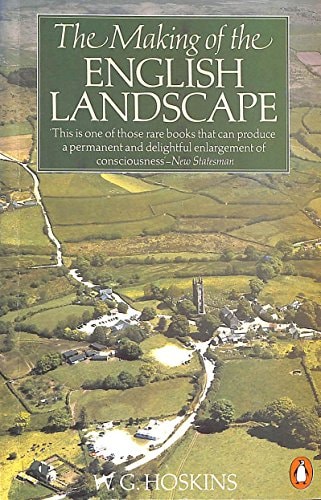
The Making of the English Landscape
0
0
As an Amazon Associate and affiliate partner, Menrva Books earns from qualifying purchases. Learn more
Author Description
Deals with the historical evolution of the English landscape as we know it. It dispels the popular belief that the pattern of the land is a result of 18th-century enclosures and attributes it instead to a much longer evolution. This book traces the chronological development of the English landscape from pre-Roman days to the eve of the Black Death, onwards to the Industrial Revolution and up to the present day. With the help of photographs and charts, Professor Hopkins discusses the origins of Devonshire hedge-banks and lanes, the ruined churches in Norfolk and lost villages in Lincolnshire, Somerset's marshland ditches, Cornwall's remote granite farmsteads and the lonely pastures of upland Northamptonshire.
Menrva's Summary
THE THESIS
This work investigates the historical evolution of the English landscape to challenge the misconception that its current patterns are primarily the result of 18th-century enclosures. W.G. Hoskins, a distinguished historian and pioneer in landscape history, utilizes a multidisciplinary approach combining archival research, field observation, and archaeological analysis. He argues that the English countryside is a palimpsest of human activity spanning millennia, shaped by agricultural practices, settlement patterns, and economic shifts long before the industrial era.
THE SCOPE MAP
What You Will Find
- Chronological analysis of land use from pre-Roman Britain through the Industrial Revolution.
- Examination of specific regional features including Devonshire hedge-banks, Norfolk ruins, and Lincolnshire lost villages.
- Integration of visual evidence through photographs and historical charts.
Scope Limits
- The text focuses primarily on rural and agricultural landscapes rather than urban planning or modern metropolitan development.
- It does not provide an exhaustive architectural history of individual buildings, focusing instead on the broader landscape context.
THE AUTHORITY PERSPECTIVE
Experts and historians widely regard this work as a foundational text that established the field of landscape history in Britain. Readers frequently note the accessible yet scholarly nature of the prose, which successfully bridges the gap between academic research and public interest in local history.
Page Count:
328
Publication Date:
1985-07-02
Publisher:
Penguin UK
ISBN-10:
0140079645
ISBN-13:
9780140079647
Politics
Non-Fiction
History
English History
Social History
Earth Sciences
Human Geography
Landscape architecture
Science & Math
Geography
Community Tags
Similar Books