Author Description
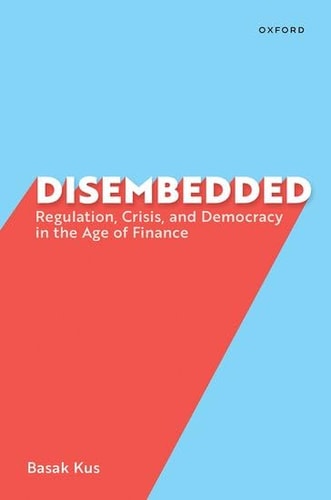
Cover -- Disembedded -- Copyright -- Dedication -- Contents -- Preface -- Acknowledgments -- Note On Sources -- 1. Polanyi On Wall Street -- Ten Years, Two Presidents -- Reading Polanyi In The Aftermath Of The Financial Crisis -- The Crisis Of The Early Twentieth Century And The Postwar Expansion Of The Protective State -- Late Twentieth-century Economic Transformations And Political Shifts -- The Financial Turn In The Economy -- The Neoliberal Turn In Government -- Disembedded Financialization: American Economy And The Deficit In Risk Protection American Government And The Great Recession -- Outline Of The Book -- 2. A New Creed On Regulation -- The Rise Of The Economic Theories Of Regulation In The 1970s And 1980s -- Regulatory Capture -- Regulation As A Source Of Rent-seeking -- Limitations Of Bureaucracy As A Technique Of Government -- Regulatory Perspectives In The 1990s -- Conclusion -- 3. The Political Ascent Of The New Creed -- Substantive Regulation Comes Under Scrutiny: Ford And Carter Administrations -- From A Pragmatic Critique To A Systematic Rejection: Reagan Administration Reinventing The Government As A Private Entity: Clinton Administration -- Conclusion -- 4. From Politics To Policy: Regulation And Finance -- Deregulation And Finance -- Regulatory Drift And Finance -- Micro-orientations In Risk Regulation -- Information Provision As Risk Regulation -- Caveat Emptor: Risk Regulation By Disclosure -- Rating Agencies -- Financial Literacy -- Conclusion -- 5. Disembeddedness In Financial Times -- The Regulatory Underpinnings Of Disembedded Finance -- The Limitations Of A Micro-oriented Approach -- The Limitations Of An Information-based Approach The Fragmented Regulatory Structure Of Us Finance -- Disembeddedness As Deficit In Risk Protection -- Deficit In Systemic Risk Protection -- Deficit In Consumer Financial Protection -- Deficit In Social Protection In The Time Of Financialization -- Conclusion -- 6. The Crisis -- Relief And Recovery: Technocrati
Menrva's Summary
THE THESIS
This book investigates how the systematic deregulation of the American financial sector, driven by neoliberal economic theories, created a structural deficit in risk protection that culminated in the 2008 financial crisis. Basak Kus utilizes the theoretical framework of Karl Polanyi to analyze the shift from a protective state to one that prioritizes market autonomy. By examining the political and regulatory transformations from the 1970s through the Great Recession, the author argues that the 'disembedding' of finance from social and political oversight left the economy vulnerable to systemic collapse. The text provides a rigorous critique of how regulatory capture and the reliance on market-based risk management undermined democratic governance.
THE SCOPE MAP
What You Will Find
- Historical analysis of US regulatory policy from the Ford administration through the Great Recession.
- Evaluation of neoliberal economic theories, including regulatory capture and rent-seeking models.
- Examination of micro-oriented risk regulation tools such as disclosure requirements and financial literacy programs.
- Assessment of the systemic deficits in consumer and social protection resulting from financialization.
THE AUTHORITY PERSPECTIVE
Experts recognize this work as a significant contribution to the political economy of finance, particularly for its application of Polanyian theory to modern market crises. Readers frequently note the academic density of the prose, which makes it a valuable resource for scholars and students of economic history and public policy.
Page Count:
0
Publication Date:
1900-01-01
Publisher:
Oxford University Press,
ISBN-10:
0197764886
ISBN-13:
9780197764886
History
Economics
Sociology
Finance
Finance & Accounting
Community Tags
Similar Books