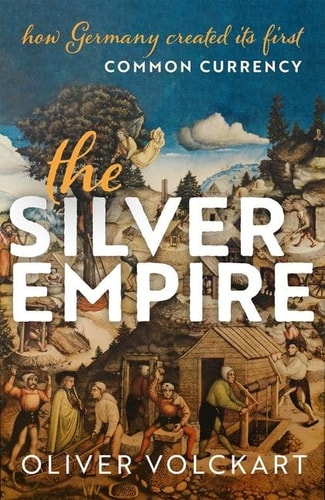
The Silver Empire: How Germany Created Its First Common Currency
0
0
As an Amazon Associate and affiliate partner, Menrva Books earns from qualifying purchases. Learn more
Author Description
Cover -- The Silver Empire: How Germany Created Its First Common Currency -- Copyright -- Preface -- Contents -- List Of Tables -- List Of Abbreviations -- List Of Figures -- List Of Maps -- List Of Plates -- Introduction -- 1: Diversity Becomes A Problem -- Trade In Coinage -- Augsburg's Currency Under Pressure -- Mecklenburg Exploits Its Neighbour -- Money Traders And Their Profits -- The Empire In Theory And Practice -- 'roman' And 'holy' -- Land-based Politics And Decentralization -- Talks, Negotiations, And Consensus Building -- Confusion And Disorder -- Money Without Borders Early Currency Unions -- A New Way Of Counting Money -- 2: People And Politics -- The Common Man -- Ideas, Rumours, Public Opinion -- The Common Man And What He Thought About Money -- Public Opinion And Monetary Policies -- Politics And Trade -- Hostility To Trade -- Merchants And Monetary Diversity -- Experimenting With Solutions -- Taking Control Of One's Borders -- From Defensive To Competitive Debasements -- A Solution That Worked-and Why Some Rejected It -- 3: Making Politics In The Empire -- Procedures And Ceremonies -- Rules Mattered -- Procedures And Rituals -- Selective Incentives The 'public Enemy No. 1' -- Overcoming Distance -- The Best Place To Hold A Diet -- The Costs Of Making Politics -- Behind The Scenes And In The Open -- The Arrival -- Informal Talks -- Colleges, Hierarchies, Power, And Influence -- 4: The Age Of Silver -- The Mining Boom -- Bullion Mining And Its Importance -- Buying Stocks And Granting Loans -- New World Silver -- The Talks Are Stalling -- The Price Of Silver -- Discord Among The Bergherren -- The Estates Without Mines Of Their Own -- At The Turning Point -- A Paradigm Shift -- The Power Of Charles V -- 5. The Rhine Gold Caravans And Caravels -- Through The Sahara And Over The Ocean -- Trade In Gold, Trade In Silver -- The Lure Of Silver -- Bimetallism -- Golden Fetters -- How To Pay Your Debts -- The Gold Of The Electors -- Opposition And Obstruction
Menrva's Summary
THE THESIS
How did the Holy Roman Empire manage to establish a common currency despite its extreme political fragmentation and decentralized power structure? Oliver Volckart, an economic historian, examines the complex interplay between political negotiation, merchant interests, and the influx of precious metals to explain the emergence of monetary integration in early modern Germany. The book argues that the creation of a common currency was not merely a top-down mandate but a result of consensus-building among diverse estates and the practical necessity of facilitating trade across borders.
THE SCOPE MAP
What You Will Find
- Analysis of the 16th-century German monetary system and currency unions.
- Examination of the impact of silver mining booms and New World bullion on European markets.
- Case studies on the political procedures of the Imperial Diet and the influence of merchant classes.
- Discussion of bimetallism and the transition from local coinage to broader monetary standards.
Scope Limits
- The text focuses primarily on the German territories within the Holy Roman Empire and does not provide a comprehensive global history of currency.
- It does not cover the technical metallurgical processes of coin minting in significant detail.
THE AUTHORITY PERSPECTIVE
Scholars and economic historians frequently cite this work for its detailed synthesis of political history and monetary theory. Readers often note the academic density of the prose, which provides a rigorous look at the institutional challenges of the Holy Roman Empire.
Page Count:
0
Publication Date:
2024-01-01
Publisher:
New York : Oxford University Press,
ISBN-10:
0191997498
ISBN-13:
9780191997495
Economics
History
Germany
European History
Finance & Accounting
Money
Finance
Community Tags
Other Editions(2)
Similar Books







Reader Comments
Share Your Thoughts
No comments yet. Be the first to share your thoughts!