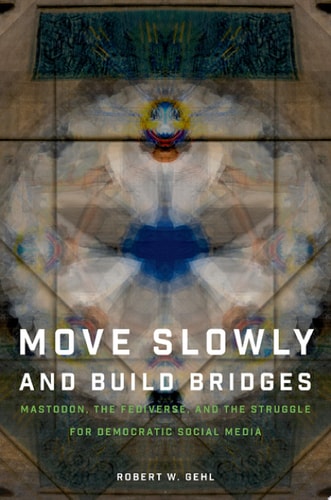
Move Slowly and Build Bridges
0
0
As an Amazon Associate and affiliate partner, Menrva Books earns from qualifying purchases. Learn more
Author Description
Better Social Media Is Possible. Move Slowly And Build Bridges Is The Story Of Activists, Software Developers, Artists, And Everyday People Who Have Built The Fediverse, A Noncentralized Alternative Social Media System. Unlike Big Tech Corporations Facebook, Tiktok, Or X, The Fediverse Is Comprised Of Thousands Of Small, Independent Communities Who Use An Internet Protocol To Communicate With One Another. These Small Communities Govern Themselves And Moderate Content At The Human Scale - Compare That To Facebook Or X, Which Try To Moderate Global Conversations. And The Fediverse Isn't Built In Order To Gather User Data And Sell Attention To Marketers - It's A More Privacy-respecting Social Media Alternative. The Most Notable Part Of The Fediverse Is Mastodon. Founded In 2016, Mastodon Was Positioned As An Alternative To Twitter. Like Twitter (or X), Mastodon Members Can Post, Like, Share, And Connect With One Another Across The World. Unlike Twitter/x, Mastodon Can Be Completely Under The Control Of Its Members, From How It's Run Down To Its Underlying Software. Making A Noncentralized, Ethically-run Social Media System Isn't Easy. The People Building The Fediverse Have Faced Long Hours, Burnout, Angry Debates And, Worst Of All, Bigotry, Death Threats, And Discrimination. They Face Constant, Nagging Doubts: Can We Really Do This? Can Noncentralized Social Media Survive In A World That Is Used To Corporate Social Media? Can We - All Of Us - Have Our Own Social Media? As Move Slowly And Build Bridges Shows Us, The Answer Is: Yes, But It's Going To Take A Struggle-- Provided By Publisher.
Menrva's Summary
THE THESIS
Can a decentralized, non-corporate social media infrastructure survive and thrive in a digital landscape dominated by massive, data-harvesting tech conglomerates? Robert W. Gehl examines the emergence of the Fediverse, a network of independent, community-governed platforms like Mastodon that prioritize user privacy and human-scale moderation over profit-driven engagement. Drawing on extensive research and interviews with the developers, activists, and artists behind these systems, Gehl argues that while the technical and social challenges of building an ethical alternative are immense, the project offers a viable, albeit difficult, path toward reclaiming digital autonomy.
THE SCOPE MAP
What You Will Find
- An analysis of the Fediverse architecture and the role of open-source protocols in enabling decentralized communication.
- Case studies of community-led moderation practices compared to the centralized oversight of platforms like X and Facebook.
- Primary source interviews with the software developers and activists who navigate burnout, technical hurdles, and online harassment.
- A critical evaluation of the economic and social barriers to scaling non-centralized social media in a corporate-dominated market.
THE AUTHORITY PERSPECTIVE
Experts in digital media studies highlight this work as a critical contribution to the discourse on platform governance and the future of the internet. Readers frequently note the accessible yet rigorous analysis of the technical and social struggles inherent in building sustainable, non-corporate digital spaces.
Page Count:
0
Publication Date:
2025-01-01
Publisher:
New York, NY, United States of America : Oxford University Press,
ISBN-10:
0197776671
ISBN-13:
9780197776674
Social Aspects
Technology
Sociology
Moral and ethical aspects
Freedom Of Information
Social Media
Community Tags
Similar Books