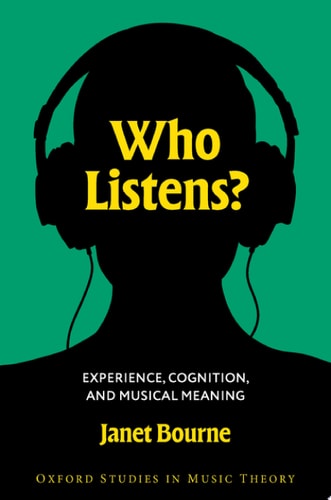
Who Listens?: Experience, Cognition, and Musical Meaning
0
0
As an Amazon Associate and affiliate partner, Menrva Books earns from qualifying purchases. Learn more
Author Description
Chapter 1 Describes How The Cognitive Process Of Analogy Can Be Used As A Framework For Analyzing How Individual Listeners Relate What They Are Hearing To What They May Have Heard Or Learned In Musical And Other Experiences In The Past. The Framework Emphasizes The Cognitive Steps A Person Takes When Making An Analogy Of Any Kind: (1) Retrieval-remembering Patterns And Associations Based On Experience; (2) Mapping-aligning Situations; And (3) Inference Transfer- Transferring Inferences/associations, Recognizing Manipulations. I Use This Process To Analyze Hearings Of Western Art Music, Illustrating Not Only How Listeners Might Analogize Music To Other Domains (such As The Body Or Language) As A Framing Analogy For Their Listening Experience, But Also How They Might Analogize Details Of The Music They Are Currently Hearing To Music They Have Heard In The Past, Creating What I Call Music-to-music Analogies-- Provided By Publisher.
Menrva's Summary
THE THESIS
This book investigates the cognitive mechanisms that allow individual listeners to construct meaning from music through the process of analogy. Janet Bourne, a scholar in music theory, utilizes cognitive science frameworks to explain how listeners bridge the gap between auditory stimuli and personal experience. By examining the mental steps of retrieval, mapping, and inference transfer, the author provides a structured approach to understanding how listeners interpret Western art music within their own cognitive contexts.
THE SCOPE MAP
What You Will Find
- A cognitive framework based on the three-step process of retrieval, mapping, and inference transfer.
- Analysis of music-to-music analogies where listeners connect current auditory experiences to past musical memories.
- Exploration of cross-domain analogies, such as relating musical structures to bodily movement or linguistic patterns.
- Application of cognitive theory to the specific analysis of Western art music.
THE AUTHORITY PERSPECTIVE
Experts in music theory and cognitive musicology recognize this work as a significant contribution to the study of listener perception. Scholars frequently note the clarity with which Bourne applies complex cognitive processes to the practical analysis of musical meaning.
Page Count:
328
Publication Date:
2025-07-29
Publisher:
Oxford University Press
ISBN-10:
0197797164
ISBN-13:
9780197797167
Psychology
Non-Fiction
Music theory
Sound Recording
Musicology
Performance theory
Musical Genres
Community Tags
Similar Books