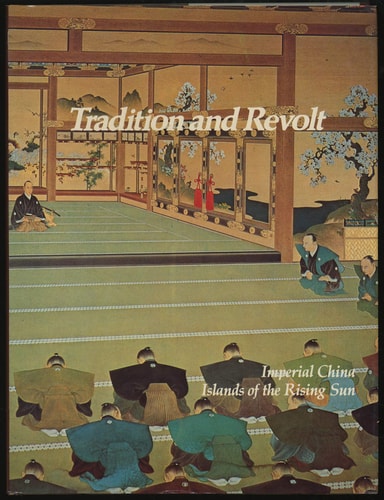
Dynasties of the East: Imperial China, Islands of the Rising Sun
0
0
As an Amazon Associate and affiliate partner, Menrva Books earns from qualifying purchases. Learn more
Author Description
From its earliest beginnings thousands of years ago, the course of man’s progress has been measured by his empires. Large, dynamic flows of power, people, and culture that merge, thrive, then break apart - the pieces only to merge again in a new configuration, the process to be repeated. Through pictures and words, "Empires: Their Rise and Fall" brings the reader face to face with many of the world’s greatest empires. Full-color photographs are combined with an absorbing narrative in a lively historical account of each empire and an examination of the period’s most enduring cultural achievements. This volume in the series focuses on Imperial China, and Islands of the Rising Sun. As Charlemagne was crowning himself King of the Holy Roman Empire in Europe, China was just beginning its fabulous Tang Dynasty, one of the most brilliant empires in the realm of the arts and in sweeping political influence. Printing and gunpowder were both invented during its rule, and Changan, the Tang capital, was at the time perhaps the greatest city in the world, with more than one million inhabitants. The power of Chinese culture to transmit its values and observances to another society was well demonstrated in Japan. Beginning with the introduction of Chinese writing and Buddhism in the fifth and sixth centuries, Chinese learning and political institutions transformed Japan from a primitive, tribal society to an ardent follower of the Chinese model. The chief of the ruling clan, who claimed descent from the sun goddess Amaterasu of early Japanese mythology, became an "emperor" in the Chinese style, having all the trappings and ritual of the Chinese court and presiding over an elaborate bureaucracy. The Japanese imperial line has continued until the present day - a unique record of unbroken succession.
Menrva's Summary
THE THESIS
This volume investigates the historical development, cultural achievements, and political evolution of Imperial China and Japan. Authors Joyce Milton and Wendy B. Murphy utilize a synthesis of historical records and cultural analysis to examine how Chinese political structures and societal values influenced the formation of the Japanese imperial state. The text argues that the transmission of institutional models from the Tang Dynasty provided the foundational framework for Japan's transition from a tribal society to a centralized imperial power.
THE SCOPE MAP
What You Will Find
- Historical overview of the Tang Dynasty in China
- Analysis of the cultural and political transmission from China to Japan
- Examination of the role of Buddhism and Chinese writing in Japanese development
- Documentation of the Japanese imperial lineage and the myth of Amaterasu
Scope Limits
- Does not provide an exhaustive military history of the regions
- Does not cover post-imperial modern political developments in depth
THE AUTHORITY PERSPECTIVE
Readers frequently note that the text serves as an accessible introduction to East Asian history for general audiences. Experts highlight the book's effective use of visual aids and narrative prose to contextualize complex historical shifts for non-specialist readers.
Page Count:
168
Publication Date:
1980-01-01
Publisher:
Edgell Communications
ISBN-10:
0150040288
ISBN-13:
9780150040286
History
Non-Fiction
United States
Imperial China
Asia
Japanese History
Asian History
World history
China
Japan
Americas
Community Tags
Similar Books