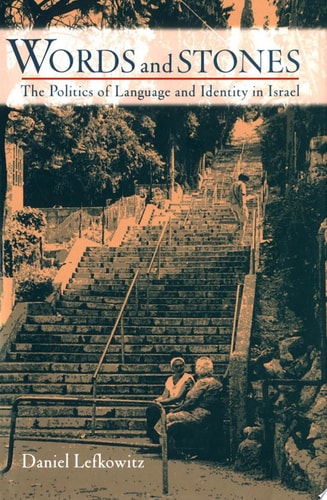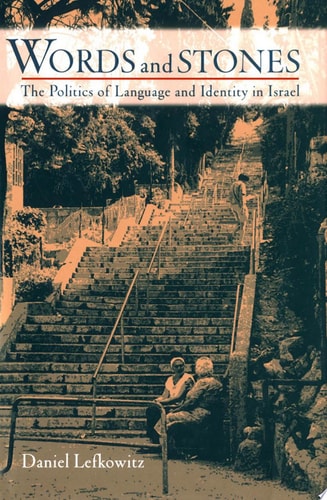
Words and Stones: The Politics of Language and Identity in Israel (Oxford Studies in Anthropological Linguistics (26))
0
0
As an Amazon Associate and affiliate partner, Menrva Books earns from qualifying purchases. Learn more
Author Description
Social and ethnic identity are nowhere more enmeshed with language than in Israel. Words and Stones explores the politics of identity in Israel through an analysis of the social life of language. By examining the social choices Israelis make when they speak, and the social meanings such choices produce, Daniel Lefkowitz reveals how Israeli identities are negotiated through language. Lefkowitz studies three major languages and their role in the social lives of Israelis: Hebrew, the dominant language, Arabic, and English. He reveals their complex interrelationship by showing how the language a speaker chooses to use is as important as the language they choose not to use - in the same way that a claim to an Israeli identity is simultaneously a claim against other, opposing identities. The result is a compelling analysis of how the identity of "Israeliness" is linguistically negotiated in the three-way struggle among Ashkenazi (Jewish), Mizrahi (Jewish), and Palestinian (Arab) Israelis. Lefkowitz's ethnography of language-use is both thoroughly anthropological and thoroughly linguistic, and provides a comprehensive view of the role language plays in Israeli society. His work will appeal to students and scholars of sociolinguistics, anthropology, and linguistic anthropology, as well as students and scholars of Israel and the Middle East.
Menrva's Summary
THE THESIS
This book investigates how the social choices made in language use function as a primary mechanism for negotiating ethnic and national identity within the complex social landscape of Israel. Daniel Lefkowitz, an anthropologist and linguist, utilizes ethnographic fieldwork to examine the interplay between Hebrew, Arabic, and English. He argues that linguistic selection is a strategic act, where the choice of one language simultaneously functions as a social claim against competing identities among Ashkenazi, Mizrahi, and Palestinian populations.
THE SCOPE MAP
What You Will Find
- Analysis of the social life of language within the Israeli context.
- Examination of the three-way linguistic struggle between Ashkenazi, Mizrahi, and Palestinian groups.
- Ethnographic methodology focusing on the social meanings produced by specific linguistic choices.
- Theoretical framework connecting language use to the construction of national and ethnic identity.
THE AUTHORITY PERSPECTIVE
Experts in the field of linguistic anthropology recognize this work as a foundational text for understanding the intersection of sociolinguistics and Middle Eastern politics. Readers frequently note the academic density of the prose, which provides a rigorous examination of how language serves as a site for political and social negotiation.
Page Count:
336
Publication Date:
2004-01-01
Publisher:
Oxford University Press
ISBN-10:
0198028431
ISBN-13:
9780198028437
Symbolism In Communication
Jews identity
Anthropological linguistics
Anthropology
Language And Culture
Middle East
Arabs israel
Ethnic relations
Community Tags
Similar Books