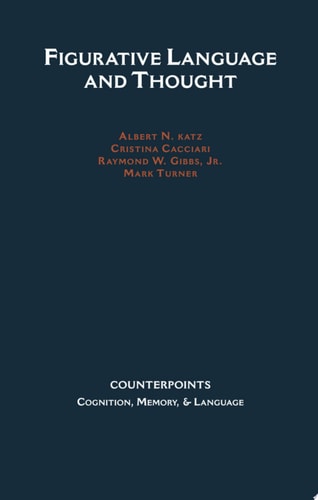
Figurative Language and Thought (Counterpoints: Cognition, Memory, and Language)
0
0
As an Amazon Associate and affiliate partner, Menrva Books earns from qualifying purchases. Learn more
Author Description
Our understanding of the nature and processing of figurative language is central to several important issues in cognitive science, including the relationship of language and thought, how we process language, and how we comprehend abstract meaning. Over the past fifteen years, traditional approaches to these issues have been challenged by experimental psychologists, linguists, and other cognitive scientists interested in the structures of the mind and the processes that operate on them. In Figurative Language and Thought, internationally recognized experts in the field of figurative language, Albert Katz, Mark Turner, Raymond W. Gibbs Jr., and Cristina Cacciari, provide a coherent and focused debate on the subject. The book's authors discuss a variety of fundamental questions, including: What can figures of speech tell us about the structure of the conceptual system? If and how should we distinguish the literal from the nonliteral in our theories of language and thought? Are we primarily figurative thinkers and consequently figurative language users or the other way around? Why do we prefer to speak metaphorically in everyday conversation, when literal options may be available for use? Is metaphor the only vehicle through which we can understand abstract concepts? What role do cultural and social factors play in our comprehension of figurative language? These and related questions are raised and argued in an integrative look at the role of nonliteral language in cognition. This volume, a part of Counterpoints series, will be thought-provoking reading for a wide range of cognitive psychologists, linguists, and philosophers.
Menrva's Summary
THE THESIS
This volume investigates the fundamental relationship between figurative language and the structure of human cognition, questioning whether metaphorical thought precedes linguistic expression. The authors, a group of internationally recognized experts in cognitive science and linguistics, synthesize experimental data and theoretical frameworks to challenge traditional distinctions between literal and non-literal meaning. By examining how abstract concepts are processed, the text argues for an integrative view of language as a primary vehicle for conceptualization.
THE SCOPE MAP
What You Will Find
- Analysis of the conceptual system and its reliance on figures of speech
- Theoretical debate regarding the distinction between literal and non-literal language processing
- Examination of the role of cultural and social factors in figurative comprehension
- Discussion on the necessity of metaphor for understanding abstract concepts
THE AUTHORITY PERSPECTIVE
Experts in the fields of cognitive psychology and linguistics identify this work as a significant contribution to the debate on non-literal language processing. Readers frequently note the academic density of the prose, which serves as a foundational text for scholars interested in the intersection of mind and language.
Page Count:
208
Publication Date:
1998-01-01
Publisher:
Oxford University Press
ISBN-10:
0198026951
ISBN-13:
9780198026952
Philosophy
Non-Fiction
Psychology
Linguistics
History & Surveys
English
English & College Success
Community Tags
Similar Books