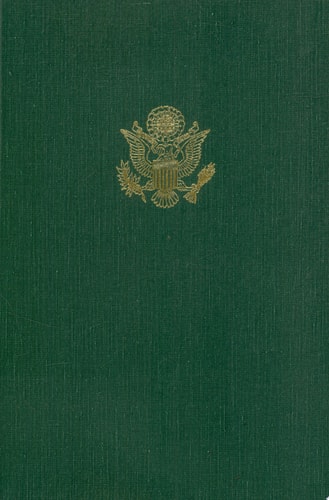
Manhattan, the Army and the Atomic Bomb
0
0
As an Amazon Associate and affiliate partner, Menrva Books earns from qualifying purchases. Learn more
Author Description
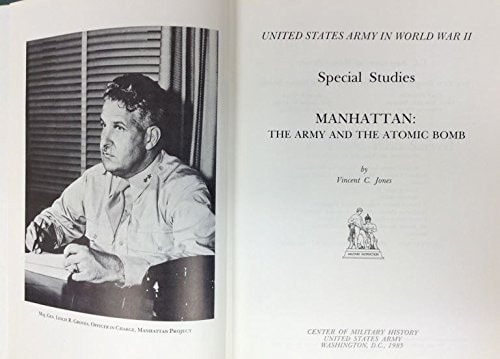
From the book's Foreword:The U.S. Army played a key role in the formation and administration of the Manhattan Project, the World War II organization which produced the atomic bombs that not only contributed decisively to ending the war with Japan but also opened the way to a new atomic age. This volume describes how the wartime Army, already faced with the enormous responsibility of mobilizing, training, and deploying vast forces to fight a formidable enemy on far-flung fronts in Europe and the Pacific, responded to the additional task of organizing and administering what was to become the single largest technological project of its kind undertaken up to that time.To meet this challenge, the Army drawing first upon the long-time experience and considerable resources of its Corps of Engineers formed a new engineer organization, the Manhattan District, to take over from the Office of Scientific Research and Development administration of a program earlier established by American and refugee scientists to exploit the military potentialities of atomic energy. Eventually, however, the rapidly expanding project turned for support and services to a much broader spectrum of the Army, including the War Department, the Ordnance Department, the Signal, Medical, Military Police, and Women's Army Corps, the Military Intelligence Division of the War Department General Staff, and the Army Air Forces. These and other Army elements worked together in close collaboration with American industry and science to win what was believed to be a desperate race with Nazi Germany to be first in producing atomic weapons. For both soldiers and civilians this history of the Army's earlier experience in dealing successfully with the then novel problems of atomic science seems likely to offer some instructive parallels for finding appropriate answers to the problems faced in today's ever more technologically complex world.
Menrva's Summary
THE THESIS
This volume investigates how the United States Army managed the administrative, logistical, and technological challenges of the Manhattan Project during World War II. Vincent C. Jones, writing as part of the official U.S. Army in World War II series, utilizes extensive archival records and primary documentation to detail the transition of the atomic program from scientific research to a massive military-industrial operation. The work argues that the Army's ability to integrate diverse departments—from the Corps of Engineers to the Army Air Forces—was the critical factor in the successful development of the atomic bomb.
THE SCOPE MAP
What You Will Find
- Detailed organizational history of the Manhattan District and the Corps of Engineers.
- Analysis of the collaboration between military leadership, American industry, and the scientific community.
- Documentation of the roles played by various Army branches including Ordnance, Medical, and Military Intelligence.
Scope Limits
- The text focuses primarily on the administrative and military management of the project rather than the technical physics of bomb construction.
- It does not provide a comprehensive history of the post-war geopolitical implications of atomic weaponry.
THE AUTHORITY PERSPECTIVE
Historians and military researchers regard this volume as a foundational, authoritative record of the administrative history of the Manhattan Project. Readers frequently note the dense, academic nature of the prose, which serves as a definitive reference for those studying the intersection of military bureaucracy and scientific development.
Page Count:
680
Publication Date:
1985-01-01
Publisher:
Center of Military History, United States Army
ISBN-10:
0160019397
ISBN-13:
9780160019395
History
Government Policy
United States
Science and Technology
World War
Military History
Americas
Nuclear Physics
Military
Weapons & Warfare
Community Tags
Similar Books