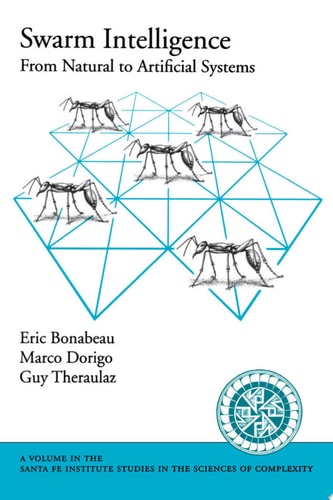
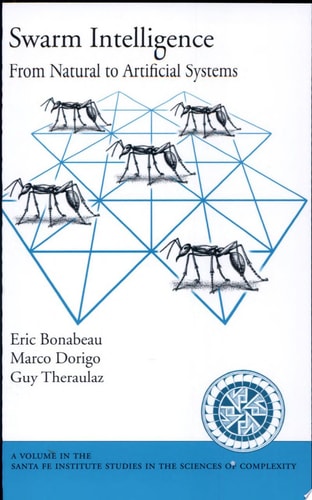
Swarm Intelligence: From Natural to Artificial Systems
0
0
As an Amazon Associate and affiliate partner, Menrva Books earns from qualifying purchases. Learn more
Author Description
Social Insects--ants, Bees, Termites, And Wasps--can Be Viewed As Powerful Problem-solving Systems With Sophisticated Collective Intelligence. Composed Of Simple Interacting Agents, This Intelligence Lies In The Networks Of Interactions Among Individuals And Between Individuals And The Environment. A Fascinating Subject, Social Insects Are Also A Powerful Metaphor For Artificial Intelligence, And The Problems They Solve--finding Food, Dividing Labor Among Nestmates, Building Nests, Responding To External Challenges--have Important Counterparts In Engineering And Computer Science. This Book Provides A Detailed Look At Models Of Social Insect Behavior And How To Apply These Models In The Design Of Complex Systems. The Book Shows How These Models Replace An Emphasis On Control, Preprogramming, And Centralization With Designs Featuring Autonomy, Emergence, And Distributed Functioning. These Designs Are Proving Immensely Flexible And Robust, Able To Adapt Quickly To Changing Environments And To Continue Functioning Even When Individual Elements Fail. In Particular, These Designs Are An Exciting Approach To The Tremendous Growth Of Complexity In Software And Information. Swarm Intelligence Draws On Up-to-date Research From Biology, Neuroscience, Artificial Intelligence, Robotics, Operations Research, And Computer Graphics, And Each Chapter Is Organized Around A Particular Biological Example, Which Is Then Used To Develop An Algorithm, A Multiagent System, Or A Group Of Robots. The Book Will Be An Invaluable Resource For A Broad Range Of Disciplines.
Menrva's Summary
THE THESIS
This book investigates how the collective behaviors of social insects can be modeled and applied to solve complex problems in engineering and computer science. The authors, experts in biology and artificial intelligence, argue that decentralized systems—characterized by autonomy and emergence—offer superior flexibility and robustness compared to traditional centralized control models. By analyzing the interactions of ants, bees, and termites, the text provides a framework for designing multiagent systems that adapt to dynamic environments.
THE SCOPE MAP
What You Will Find
- Mathematical models of social insect behavior including foraging, nest building, and labor division.
- Algorithmic implementations of swarm intelligence for software and information systems.
- Case studies bridging biological observations with robotics and operations research.
- Methodologies for replacing centralized programming with distributed, autonomous agent functioning.
THE AUTHORITY PERSPECTIVE
Experts recognize this work as a foundational text that successfully bridges the gap between biological research and computational design. Readers frequently note the technical density of the prose, which requires a solid background in mathematics and computer science to fully grasp the proposed algorithms.
Page Count:
320
Publication Date:
1999-01-01
Publisher:
Oxford University Press, Incorporated
ISBN-10:
0198030150
ISBN-13:
9780198030157
Computer Science
Mathematics
Computational complexity
Biology
Robotics
Community Tags
Other Editions(2)
Similar Books