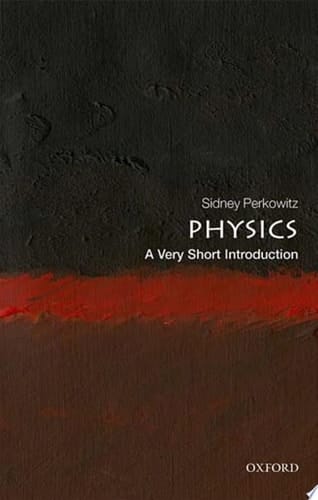
Author Description
We Ask Question After Question Of An Indifferent Universe That Would Just As Soon Remain Mute; And Slowly, Patiently, One Sentence At A Time, We Write Our Own Version Of The Book Of Nature. It Is Called Science, From The Latin Word For Knowledge, And It Is A Book Everybody Should Read. With Simplicity And Elegance, Knowing Interprets The Book Of Nature For Curious Readers Of All Sorts--but Especially For Those Hoping To Appreciate The Beauty Of Physics Without Getting Lost In The Mathematics. Indeed, There Is A World Of Scientific Understanding In The Pages Of This Gracefully Written And Inviting Book, Where Hundreds Of Little Diagrams Substitute For The Equations That Physicists Otherwise Need To Tell Their Tale. Readers Will Discover The Way Things Work: How Big Things (like Earth Or Moon) Come From Small Things (like Quarks And Electrons), How Tiny Particles Push And Pull, And How The World Hangs In The Balance. We Learn How An Unbiased Observer And A Fixed Speed Of Light, Nothing Else, Conjure Up E=mc2 And Four-dimensional Space-time. We See How Newton's Clockwork Universe Of Unwavering Determination Differs (but Not In Every Respect) From Heisenberg's Quantum Universe Of Hazy Uncertainty. And We See How A World Of Chaos Throws A Wrench Into Everybody's Mechanical Ideal. From Tiny Atoms To Vast Galaxies, The Universe Is Ours To Explore And To Know: Its Particles, Its Interactions, Its Laws, Its Unending Surprises. Heavily Illustrated With Explanatory Drawings And Diagrams--perhaps No Other Science Book For General Readers Uses Diagrams So Extensively--knowing Takes Us To The Edge Of Modern Science, Allowing Us To Peer In Further Than We Would Have Dreamed Possible.
Menrva's Summary
THE THESIS
How can the complex principles of physics be communicated to a general audience without relying on advanced mathematical equations? Michael Munowitz, an experienced science communicator, argues that the fundamental laws of nature are accessible through visual logic and conceptual reasoning. By replacing abstract formulas with hundreds of explanatory diagrams, the author constructs a framework that allows readers to grasp the mechanics of the universe from the subatomic level to the scale of galaxies.
THE SCOPE MAP
What You Will Find
- Conceptual explanations of particle physics, including quarks and electrons.
- Visual methodologies for understanding relativity and E=mc2.
- Comparative analysis of Newtonian clockwork mechanics versus Heisenberg's quantum uncertainty.
- Explorations of chaos theory and its impact on deterministic physical models.
THE AUTHORITY PERSPECTIVE
Experts and readers frequently highlight the book's unique reliance on diagrams as a primary pedagogical tool for non-specialists. The text is widely regarded as a foundational entry point for those seeking to understand physical laws without the barrier of high-level mathematics.
Page Count:
432
Publication Date:
2005-01-01
Publisher:
Oxford University Press
ISBN-10:
0198037392
ISBN-13:
9780198037392
Non-Fiction
Science
Popular Science
Physics
Education
Community Tags
Similar Books