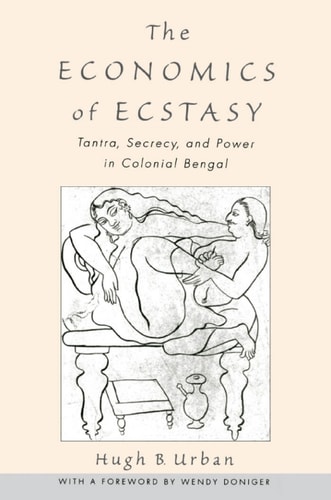
The Economics of Ecstasy: Tantra, Secrecy and Power in Colonial Bengal
0
0
As an Amazon Associate and affiliate partner, Menrva Books earns from qualifying purchases. Learn more
Author Description
This is a study of the Bengali Kartabhaja sect and its place in the broader movement of Tantrism, an Indian religious movement employing purposely shocking sexual language and rituals. Urban looks closely at the relationship between the rise of the Kartabhajas, who flourished at the turn of the 19th century, and the changing economic context of colonial Bengal. Made up of the poor lower classes laboring in the marketplaces and factories of Calcutta, the Kartabhajas represent "the underworld of the imperial city." Urban shows that their esoteric poetry and songs are in fact saturated with the language of the marketplace and the bazaar, which becomes for them the key metaphor used to communicate secret knowledge and mystical teachings.
Menrva's Summary
THE THESIS
This work investigates the intersection of esoteric religious practice, socioeconomic marginalization, and colonial power dynamics within the Kartabhaja sect of 19th-century Bengal. Hugh B. Urban, a scholar of religion and South Asian studies, utilizes historical records, religious poetry, and economic data to argue that the sect's Tantric rituals and language were not merely spiritual, but a direct reflection of the market-driven realities faced by the urban poor in colonial Calcutta. By examining the synthesis of mystical teachings and bazaar terminology, Urban demonstrates how the sect navigated and critiqued the imperial economic structure.
THE SCOPE MAP
What You Will Find
- Historical analysis of the Kartabhaja sect during the 19th-century colonial period.
- Examination of the relationship between Tantric ritual language and marketplace metaphors.
- Socioeconomic study of the lower-class labor force in Calcutta's factories and bazaars.
- Theoretical framework connecting religious secrecy to power dynamics in an imperial context.
THE AUTHORITY PERSPECTIVE
Scholars in the field of South Asian religious studies recognize this text as a significant contribution to understanding the material conditions of esoteric movements. Readers frequently note the academic density of the prose and the author's meticulous integration of primary source poetry with historical economic analysis.
Page Count:
304
Publication Date:
2001-01-01
Publisher:
Oxford University Press
ISBN-10:
0198031823
ISBN-13:
9780198031826
History
Economics
Religion
India
Special Topics
Sociology
Body Mind Spirit
Community Tags
Similar Books