Win-win Ecology
0
0
As an Amazon Associate and affiliate partner, Menrva Books earns from qualifying purchases. Learn more
Author Description
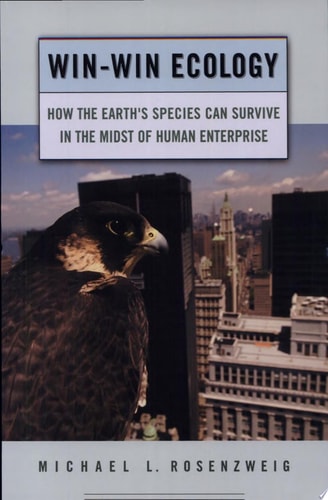
As Humanity Presses Down Inexorably On The Natural World, People Debate The Extent To Which We Can Save The Earth's Millions Of Different Species Without Sacrificing Human Economic Welfare. But Is This Argument Wise? Must The Human And Natural Worlds Be Adversaries? In This Book, Ecologist Michael Rosenzweig Finds That Ecological Science Actually Rejects Such Polarization. Instead It Suggests That, To Be Successful, Conservation Must Discover How We Can Blend A Rich Natural World Into The World Of Economic Activity. This Revolutionary, Common Ground Between Development And Conservation Is Called Reconciliation Ecology: Creating And Maintaining Species-friendly Habitats In The Very Places Where People Live, Work, Or Play. The Book Offers Many Inspiring Examples Of The Good Results Already Achieved. The Nature Conservancy, For Instance, Has A Cooperative Agreement With The Department Of Defense, With More Than 200 Conservation Projects Taking Place On More Than 170 Bases In 41 States. In Places Such As Elgin Air Force Base, The Human Uses-testing Munitions, Profitable Timbering And Recreation--continue, But Populations Of Several Threatened Species On The Base, Such As The Long-leaf Pine And The Red-cockaded Woodpecker, Have Been Greatly Improved. The Safe Harbor Strategy Of The Fish & Wildlife Service Encourages Private Landowners To Improve Their Property For Endangered Species, Thus Overcoming The Unintended Negative Aspects Of The Endangered Species Act. And Golden Gate Park, Which Began As A System Of Sand Dunes, Has Become, Through Human Effort, A World Of Ponds And Shrubs, Waterfowl And Trees. Rosenzweig Shows That Reconciliation Ecology Is The Missing Tool Of Conservation, The Practical, Scientifically Based Approach That, When Added To The Rest, Will Solve The Problem Of Preserving Earth's Species.
Menrva's Summary
THE THESIS
Can humanity reconcile the expansion of economic activity with the urgent necessity of preserving global biodiversity? Ecologist Michael L. Rosenzweig challenges the traditional dichotomy between human development and environmental conservation. By synthesizing ecological principles with practical land-management strategies, he argues that the integration of species-friendly habitats into human-dominated landscapes is not only possible but necessary for long-term ecological stability.
THE SCOPE MAP
What You Will Find
- The conceptual framework of reconciliation ecology as a bridge between development and conservation.
- Case studies of successful habitat integration on military bases and public lands.
- Analysis of the Safe Harbor strategy for private landowner engagement.
- Practical methodologies for transforming urban and industrial spaces into functional ecosystems.
THE AUTHORITY PERSPECTIVE
Experts and environmental scientists recognize this work as a significant contribution to the field of conservation biology. Readers frequently note the clarity of the author's arguments and the accessibility of the provided real-world examples.
Page Count:
224
Publication Date:
2003-01-01
Publisher:
Oxford University Press
ISBN-10:
0198035454
ISBN-13:
9780198035459
Nature
Conservation
Sustainability
Ecology
Community Tags
Similar Books