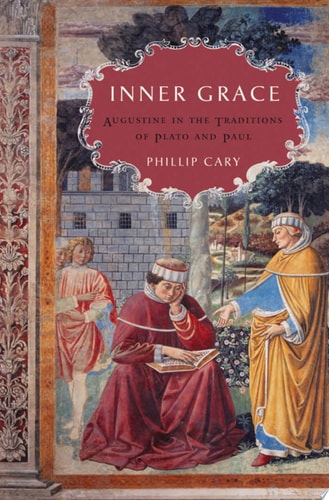
Inner Grace: Augustine in the Traditions of Plato and Paul
0
0
As an Amazon Associate and affiliate partner, Menrva Books earns from qualifying purchases. Learn more
Author Description
This book is, along with Outward Signs (OUP 2008), a sequel to Phillip Cary's Augustine and the Invention of the Inner Self (OUP 2000). In this work, Cary traces the development of Augustine's epochal doctrine of grace, arguing that it does not represent a rejection of Platonism in favor of a more purely Christian point of view a turning from Plato to Paul, as it is often portrayed. Instead, Augustine reads Paul and other Biblical texts in light of his Christian Platonist inwardness, producing a new concept of grace as an essentially inward gift. For Augustine, grace is needed first of all to heal the mind so it may see God, but then also to help the will turn away from lower goods to love God as its eternal Good. Eventually, over the course of Augustine's career, the scope of the soul's need for grace expands outward to include not only the inner vision of the intellect and the power of love but even the initial gift of faith. At every stage, Augustine insists that divine grace does not compromise or coerce the human will but frees, heals, and helps it, precisely because grace is not an external force but an inner gift of delight leading to true happiness. As his polemic against the Pelagians develops, however, he does attribute more to grace and less to the power of free will. In the end, it is God's choice which makes the ultimate difference between the saved and the damned, and we cannot know why he chooses to save one person and not another. From this Augustinian doctrine of divine choice or election stem the characteristic pastoral problems of predestination, especially in Protestantism. A more external, indeed Jewish, doctrine of election would be more Biblical, Cary suggests, and would result in a less anxious experience of grace. Along with its companion work, Outward Signs, this careful and insightful book breaks new ground in the study of Augustine's theology of grace and sacraments.
Menrva's Summary
THE THESIS
This book investigates the development of Augustine's doctrine of grace by challenging the traditional narrative that he abandoned Platonism in favor of a strictly Pauline theology. Phillip Cary, a scholar of historical theology, utilizes a close reading of Augustine's texts to argue that the philosopher synthesized Christian Platonist inwardness with biblical interpretation. He posits that Augustine's concept of grace evolved into an internal gift designed to heal the mind and orient the human will toward God, ultimately leading to complex theological conclusions regarding divine election.
THE SCOPE MAP
What You Will Find
- An analysis of the intersection between Platonic philosophy and Pauline theology in Augustine's work.
- A detailed examination of the evolution of the doctrine of grace throughout Augustine's career.
- A critique of the pastoral implications of Augustinian predestination within the context of Protestant thought.
- A comparative study of internal versus external concepts of divine election.
THE AUTHORITY PERSPECTIVE
Scholars and theologians recognize this work as a significant contribution to the study of Augustinian thought, particularly regarding his influence on later Western theology. Readers frequently note the academic density of the prose, which is intended for those already familiar with the history of Christian philosophy and the specific polemics of the Pelagian controversy.
Page Count:
208
Publication Date:
2008-01-01
Publisher:
Oxford University Press
ISBN-10:
019804433X
ISBN-13:
9780198044338
Philosophy
History
Politics
Christianity
Kindle Store
Theology
Categories
Grace Theology
Kindle eBooks
Academic
Community Tags
Other Editions(2)

Similar Books









Reader Comments
Share Your Thoughts
No comments yet. Be the first to share your thoughts!