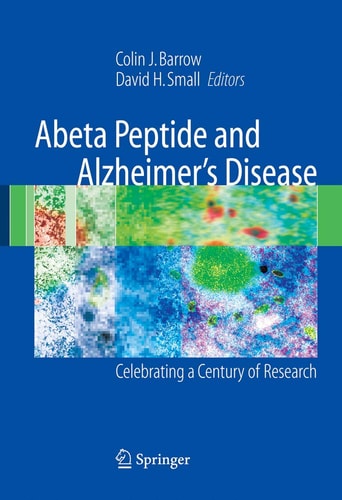
Abeta Peptide and Alzheimer's Disease: Celebrating a Century of Research
0
0
As an Amazon Associate and affiliate partner, Menrva Books earns from qualifying purchases. Learn more
Author Description
Recent advances in genetics and brain biochemistry point to the Abeta peptide as the major culprit in causing neurodegeneration in Alzheimer’s Disease (AD). Abeta Peptide and Alzheimer’s Disease is specifically targeted at summarizing current knowledge of the Abeta peptide and its role in AD. Written by leaders in the industrial and academic world specializing in this rapidly moving area, the book covers fundamental biochemical studies on this peptide, the genetic impact on Abeta expression and processing, and various AD therapeutic strategies that target Abeta. Although specifically focusing on the Abeta peptide and AD, there is also some discussion on the similarity and differences of this peptide and AD with other amyloidogenic diseases, such as prion disease, Parkinsons and Huntingtons. This book will primarily be of interest to AD researchers and clinicians but also to researchers of other amyloid diseases.
Menrva's Summary
THE THESIS
This book investigates the central role of the Abeta peptide in the neurodegeneration characteristic of Alzheimer's Disease. Written by leading experts in both academic and industrial fields, it synthesizes current knowledge on the Abeta peptide and its pathological involvement in AD. The text explores fundamental biochemical studies, the influence of genetics on Abeta expression and processing, and the diverse therapeutic strategies aimed at targeting Abeta. It also draws parallels and distinctions between Abeta and the amyloidogenic processes in other diseases like prion disease, Parkinson's, and Huntington's.
THE SCOPE MAP
- Fundamental biochemical studies on the Abeta peptide
- Genetic impact on Abeta expression and processing
- Various therapeutic strategies targeting Abeta in Alzheimer's Disease
- Discussion of similarities and differences with other amyloidogenic diseases (prion, Parkinson's, Huntington's)
- Focus on current knowledge and recent advances in the field
THE AUTHORITY PERSPECTIVE
This book is primarily intended for Alzheimer's Disease researchers and clinicians, as well as researchers studying other amyloid diseases. The content is presented by leaders in the industrial and academic world specializing in this rapidly moving area. The book aims to summarize current knowledge on the Abeta peptide and its role in AD, covering biochemical studies, genetic impacts, and therapeutic strategies. It also provides comparative insights into other amyloidogenic diseases.
Page Count:
298
Publication Date:
2006-12-18
Publisher:
Springer London
ISBN-10:
1852339616
ISBN-13:
9781852339616
Science
Health
Non-Fiction
Biochemistry
Medical research
Neuroscience
Community Tags
Similar Books