Kocharethi: The Arayar Woman
0
0
As an Amazon Associate and affiliate partner, Menrva Books earns from qualifying purchases. Learn more
Author Description
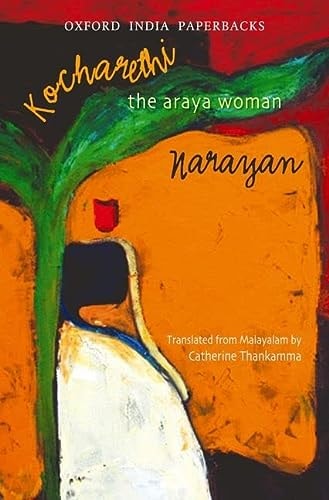
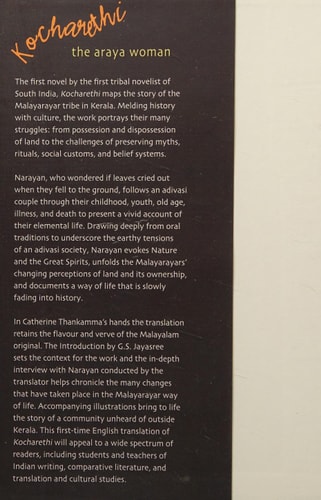
Set in the 1930s, the novel revolves around the Mala Arayars, a tribe in the hilly terrains of mid-eastern Kerala. Capturing their suffering, anguish, love, desire, aspiration, and frustration, Kocharethi depicts their move towards citizenship in independent India, the changing perceptions of land and its ownership, and their longing for an elemental life. While the first half of the novel focuses on belief systems, rituals, and various social codes, the second half recounts moments of despair and personal loss. Together they create an identity for the Mala Arayars, and present a life-system that is slowly fading away. Translated by Catherine Thankamma, this volume includes a detailed Introduction by G.S. Jayasree. An in-depth interview of Narayan adds value to the book. Thirty-four illustrations bring to life the story of a community that has remained largely unheard outside Kerala. With explanatory notes providing cultural connotations of certain Malayalam terms and a glossary, this edition will appeal to a wide spectrum of readers.
Menrva's Summary
THE PULSE
The novel centers on the Mala Arayar tribe in 1930s Kerala as they navigate the encroaching pressures of modernity and the shifting definitions of land ownership. The narrative follows the lives of the Arayar people, specifically focusing on their internal social structures, rituals, and the eventual struggle for recognition within the framework of an independent India. Narayan employs a descriptive, observational style to document the transition from traditional, elemental living to the complexities of citizenship. The story serves as a record of a community facing the erosion of their ancestral way of life, balancing personal desires against the weight of systemic change.
INSIDE THE PAGES
- Focus on the Mala Arayar tribal community in mid-eastern Kerala
- Exploration of 1930s social codes and belief systems
- Detailed depiction of rituals and traditional life-systems
- Examination of the transition toward citizenship in independent India
- Analysis of changing perceptions regarding land ownership
- Inclusion of thirty-four illustrations to visualize the tribal setting
- Provision of explanatory notes for Malayalam cultural terms
- Inclusion of a glossary and an in-depth interview with the author
THE COLLECTIVE ECHO
Discussion often centers on the novel's role as a vital ethnographic record of a community that has historically remained unheard outside of Kerala. Readers frequently highlight the balance between the intimate, personal losses of the characters and the broader, systemic shifts affecting the tribe. Critics note that the translation effectively preserves the cultural nuances of the original Malayalam text, making the specific rituals and social codes accessible to a wider audience. The narrative is praised for its ability to present a fading life-system without resorting to overly sentimental tropes. Many readers find the inclusion of the author's interview and the glossary to be essential components for understanding the depth of the historical context provided.
Page Count:
264
Publication Date:
2011-03-25
Publisher:
Oxford University Press
ISBN-10:
0198070470
ISBN-13:
9780198070474
Historical Fiction
Indian
Tribal Studies
Social Issues
India
Cultural
Community Tags
Similar Books