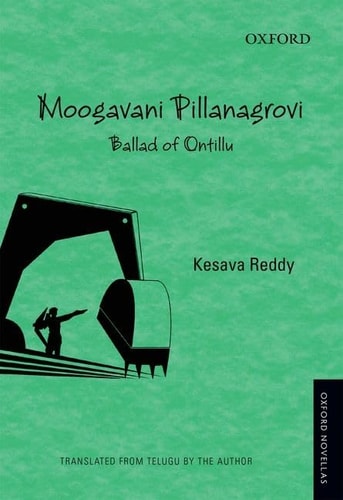
Moogavani Pillanagrovi: Ballad of Ontillu
0
0
As an Amazon Associate and affiliate partner, Menrva Books earns from qualifying purchases. Learn more
Author Description
Moogavani Pillanagrovi (1993) is woven around the near-suicidal death of a farmer who loses his land. While the period of the plot is around the 1950s, the story revolves around the farmer's ties with his land and his inability to visualize a life without it-an issue relevant even today. The farmer's death could have been forgotten by the village, except for several puzzling incidents that crop up. Myth and reality intertwine to create a folklore around the land and the farmer.This Telugu novella was first published in 1993, during a period when Andhra Pradesh's farmers had begun committing suicide in droves. Many surprising parallels can be drawn to the pressures in agriculture and the farmer in real life and in the novel. This novella introduced what is called (in Telugu literary criticism) as magic realism-mirroring real life and yet making wide departures into the world of lore, mythic representation, and strongly rooted cultural beliefs. Kesava Reddy writes with a strong inflection of his native Rayalaseema dialect. Breaking the tradition of writing in the standard Telugu form as it is spoken and written by people from the coastal districts of Krishna and Guntur, Kesava Reddy along with several other writers began writing in his native dialect-a bold step at that time. The detail in the novel is striking. Kesava Reddy also broke with Telugu literature (which was didactic at that time) to build on detail and cut down on dialogue. His dialogues are sparse and never interfere with the tempo built up in the story.
Menrva's Summary
THE PULSE
The sudden, tragic death of a dispossessed farmer triggers a series of inexplicable events that transform his personal loss into a haunting local legend. The narrative follows the aftermath of a farmer's suicide in the 1950s, exploring his profound, inextricable bond with the land he lost. As the community grapples with the mystery of his passing, the story shifts between the harsh realities of agricultural life and the encroaching influence of myth. The prose utilizes a distinct regional dialect to ground the narrative in a specific cultural landscape, moving away from conventional storytelling to emphasize atmosphere and symbolic detail.
INSIDE THE PAGES
- Utilization of magic realism to bridge the gap between rural reality and folklore.
- Employment of the Rayalaseema dialect to establish authentic regional identity.
- Minimalist dialogue structure that prioritizes narrative tempo over exposition.
- Focus on the socio-economic pressures facing farmers in mid-20th century Andhra Pradesh.
- Integration of mythic representation to elevate the protagonist's struggle.
- Emphasis on sensory detail to depict the connection between the farmer and his land.
- Non-didactic narrative approach that avoids moralizing the central tragedy.
- Exploration of the psychological impact of land dispossession on the individual.
THE COLLECTIVE ECHO
Readers and critics frequently highlight the novella's departure from standard Telugu literary traditions of the time. Discussion often centers on Kesava Reddy's innovative use of dialect and his ability to weave social commentary into a framework of magic realism. The sparse dialogue is often noted for its effectiveness in maintaining the story's momentum without sacrificing depth. Many observers appreciate how the work balances the specific historical context of 1950s agriculture with universal themes of loss and cultural identity.
Page Count:
152
Publication Date:
2014-02-02
Publisher:
Oxford University Press
ISBN-10:
0198097425
ISBN-13:
9780198097426
Literary Fiction
Fiction
Social Commentary
Magic Realism
Regional