Author Description
The Arthashastra is an ancient Indian treatise on statecraft, economic policy and military strategy, written in Sanskrit. It identifies its author by the names 'Kauṭilya' and 'Vishnugupta', both names that are traditionally identified with Chanakya (c. 350–283 BC), who was a scholar at Takshashila and the teacher and guardian of Emperor Chandragupta Maurya, founder of the Mauryan Empire. The text was influential until the 12th century, when it disappeared. It was rediscovered in 1904 by R. Shamasastry, who published it in 1909. The first English translation was published in 1915.Roger Boesche describes the Arthaśāstra as "a book of political realism, a book analysing how the political world does work and not very often stating how it ought to work, a book that frequently discloses to a king what calculating and sometimes brutal measures he must carry out to preserve the state and the common good."Centrally, Arthaśāstra argues how in an autocracy an efficient and solid economy can be managed. It discusses the ethics of economics and the duties and obligations of a king. The scope of Arthaśāstra is, however, far wider than statecraft, and it offers an outline of the entire legal and bureaucratic framework for administering a kingdom, with a wealth of descriptive cultural detail on topics such as mineralogy, mining and metals, agriculture, animal husbandry, medicine and the use of wildlife. The Arthaśāstra also focuses on issues of welfare (for instance, redistribution of wealth during a famine) and the collective ethics that hold a society together.
Menrva's Summary
THE THESIS
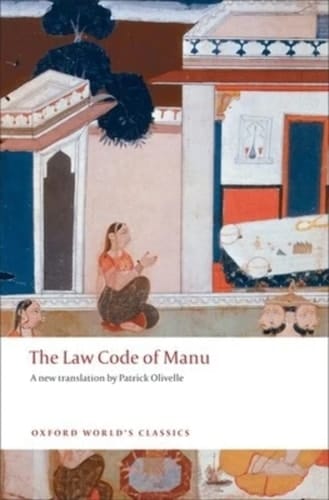
This work investigates the foundational principles of statecraft, economic management, and legal administration as articulated in the ancient Indian treatise known as the Arthashastra. Patrick Olivelle, a renowned scholar of Indian literature and history, provides a rigorous analysis of this text, which is traditionally attributed to Chanakya, the advisor to Emperor Chandragupta Maurya. The book examines the treatise not merely as a historical relic, but as a sophisticated manual on political realism, exploring the pragmatic and often ruthless measures required to maintain state stability and economic prosperity in an autocratic system.
THE SCOPE MAP
What You Will Find
- A comprehensive examination of the Mauryan Empire's administrative and bureaucratic frameworks.
- Detailed analysis of economic policies, including taxation, agriculture, and resource management.
- Exploration of the ethical obligations and duties of a monarch in maintaining social order.
- Insights into ancient Indian cultural practices, ranging from mineralogy and mining to public welfare and famine relief.
THE AUTHORITY PERSPECTIVE
Experts recognize this edition as a significant contribution to the study of classical Indian political thought, noting the clarity and precision of the translation and commentary. Readers frequently highlight the text's accessibility for those interested in the intersection of ancient philosophy and practical governance.
Page Count:
0
Publication Date:
1900-01-01
Publisher:
Oxford
ISBN-10:
0198096267
ISBN-13:
9780198096269
History
Economics
Philosophy
Law
Ancient History
Community Tags
Similar Books