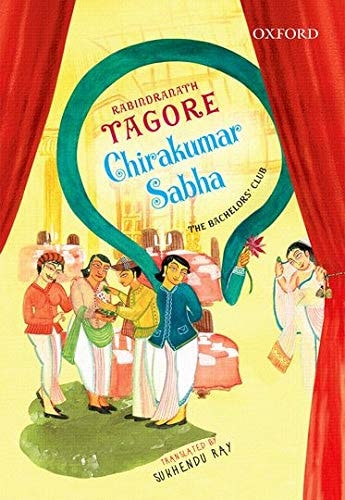
Chirakumar Sabha: The Bachelor's Club: A Comedy in Five Acts
0
0
As an Amazon Associate and affiliate partner, Menrva Books earns from qualifying purchases. Learn more
Author Description
Set in Calcutta in the early nineteenth century, the play Chirakumar Sabha (The Bachelors' Club), originally written by Rabindranath Tagore (1861-1941), is neatly aimed at matrimony and against celibacy. Calcutta was the capital of British India then. Members of Chirakumar Sabha have vowed to remain unmarried throughout life. The Club is headed by Chandrababu, a professor, who lives with his niece, Nirmala, and at whose house the meetings of Chirakumar Sabha are held. The coup de grace comes when the sole survivor, Purna, falls for Chandrababu's niece. A hilarious account of a group of bachelors eventually getting married in due course, this translation from the Bengali original by Sukhendu Ray captures the spirit of the original play while retaining its readability.
Menrva's Summary
THE PULSE
A group of self-proclaimed bachelors finds their vow of celibacy tested when romantic entanglements threaten the stability of their exclusive club. The narrative follows the members of the Chirakumar Sabha, led by the professor Chandrababu, as they attempt to maintain their commitment to bachelorhood in nineteenth-century Calcutta. The primary conflict arises when the club's last remaining stalwart, Purna, encounters Chandrababu's niece, Nirmala, forcing a confrontation between their rigid ideology and the inevitability of human affection. The play utilizes a structured five-act format to explore the tension between social expectations and personal desire.
INSIDE THE PAGES
- Five-act theatrical structure
- Satirical exploration of social vows
- Nineteenth-century Calcutta setting
- Character-driven comedic dialogue
- Thematic focus on the conflict between celibacy and matrimony
- Intergenerational dynamics between the professor and his niece
- Romantic subplot serving as the catalyst for character development
- Translation from the original Bengali text
THE COLLECTIVE ECHO
Readers and critics often note the play's lighthearted approach to the social conventions of colonial-era India. Discussion frequently centers on the effectiveness of Tagore's humor in critiquing the performative nature of the bachelors' club. The pacing is described as brisk, allowing the comedic misunderstandings to unfold naturally across the five acts. Many appreciate how the translation maintains the wit of the original while remaining accessible to a modern audience. The work is frequently cited for its ability to balance social commentary with a classic romantic narrative structure.
Page Count:
212
Publication Date:
2015-01-01
Publisher:
Oxford University Press
ISBN-10:
0198099444
ISBN-13:
9780198099444
Drama
Dramatic works
Comedy
Indian
Plays
classic
Community Tags
Similar Books