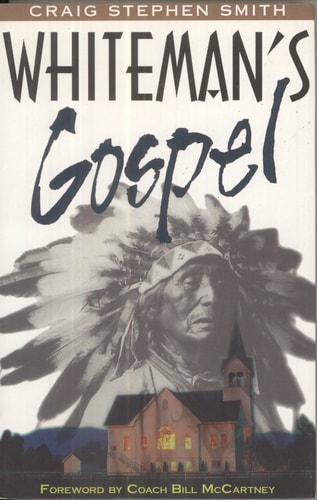
Whiteman's Gospel
0
0
As an Amazon Associate and affiliate partner, Menrva Books earns from qualifying purchases. Learn more
Author Description
Reconciliation is a key theme in Craig Smith's 'Whiteman's Gospel.' Pay particular attention to Chapter 3, 'Christianity & Indian History.' I was so moved by this chapter several years ago that it inspired me to write my own book. Very little is written about what the Church has done to Indian people. When we think of atrocities that were experienced by Native Americans, we tend to think that it was primarily the U.S. government that was responsible. Such was not the case, for in many instances, the Church has been responsible for genocide, sexual abuse, and kidnapping. We must face up to these facts before reconciliation can begin, and Mr. Smith's book accomplishes just that. I speak not as an outsider but as a fellow minister to Native Americans. For three years I have worked among the Omaha and Winnebago Tribes and I can tell you that 'Whiteman's Gospel' is very factual, relevant, and much needed. Indian people rank at the bottom in academics, their young people commit suicide at rates 5 times higher than the general population, and medical facilites are either non-existent, or in disrepair. Clearly, these people are in distress and only the Church can meet many of their needs. Craig Smith's book makes those needs known. If you don't know anything about Native American ministry, then 'Whiteman's Gospel' is a book that you must read
Menrva's Summary
THE THESIS
The book confronts the historical complicity of the Church in the suffering of Native Americans and advocates for reconciliation. Bill McCartney and Craig S. Smith's work examines the often-overlooked role of religious institutions in the atrocities, genocide, sexual abuse, and kidnapping experienced by Indigenous peoples. It argues that acknowledging these historical facts is a necessary precursor to genuine reconciliation. The book highlights the ongoing distress faced by Native American communities, including disparities in education, high suicide rates, and inadequate healthcare, asserting that the Church is uniquely positioned to address many of these needs.
THE SCOPE MAP
- An examination of Christianity's impact on Indian History, particularly in Chapter 3.
- A critical look at the Church's role in historical atrocities against Native Americans, including genocide, sexual abuse, and kidnapping.
- An argument for reconciliation based on confronting historical truths.
- An overview of the current distress faced by Native American communities, such as educational and health disparities.
- A call for the Church to address the needs of Native American peoples.
THE AUTHORITY PERSPECTIVE
The book is presented as a factual and relevant work, particularly noted for its examination of Christianity's role in the history of Native Americans. One reader, a minister to Native Americans, found Chapter 3 so impactful that it inspired their own writing, emphasizing the scarcity of information on the Church's negative impact. This reader, with three years of experience among the Omaha and Winnebago Tribes, vouches for the book's accuracy and necessity in understanding the distress faced by Indigenous communities. The work is seen as essential for anyone seeking to understand Native American ministry and the historical context of the Church's involvement.
Page Count:
153
Publication Date:
1998-06-01
Publisher:
Intertribal Christian Communications, Incorporated
ISBN-10:
0920379125
ISBN-13:
9780920379127
History
Non-Fiction
Religion
Social Issues
Community Tags
Similar Books