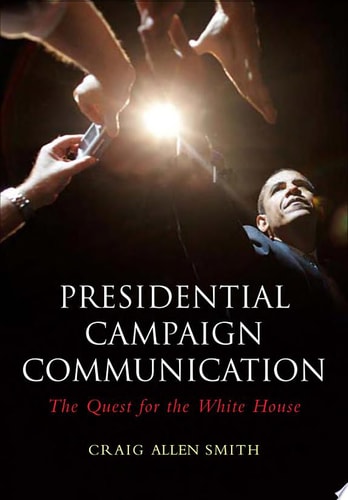
Presidential Campaign Communication The Quest for the White House
0
0
As an Amazon Associate and affiliate partner, Menrva Books earns from qualifying purchases. Learn more
Author Description
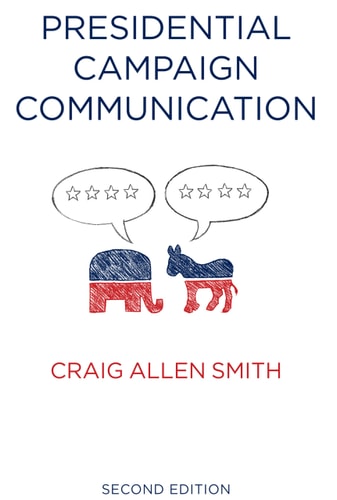
Presidential Campaign Communication is designed to help readers understand and appreciate more fully the ways that the people of the United States use the process of human communication to select their Presidents. It explores presidential politics as one of the things about which Americans talk, thereby building relationships and redefining communities and shaping public identities and priorities. The book highlights three major areas: Presidential Campaigns as Communication – A consideration of the ways in which Constitutional requirements create political challenges that can only be met by influencing people through communication. Relevant communication theories are introduced and applied to frame the communication challenges facing candidates, voters and the media. Stages of the Campaign for the White House – Presidential campaigns evolve through identifiable stages – from surfacing through the primaries and nomination to resolution in the Electoral College. Each stage presents a different set of communication dynamics and challenges for the participants, and different ways for observers to understand the progress being made. Modes of Presidential Campaign Communication. – Laws and rules, political debates, campaign speeches, advertising, news coverage, email and “You Tube” provide political actors with a variety of ways to shape the campaign’s evolution. Written with verve and clarity, and illustrated with varied examples including the 2008 campaigns, Presidential Campaign Communication is required reading for all students of politics and the media, and for anyone seeking to understand more fully the system of democracy in the United States, and the central role that communication plays therein.
Menrva's Summary
THE THESIS
This book investigates how human communication shapes the selection of United States Presidents. It examines presidential politics as a communicative process that builds relationships, redefines communities, and shapes public identities and priorities, exploring the constitutional requirements that necessitate influencing people through communication and introducing relevant communication theories. The book details the evolution of campaigns through distinct stages, from primaries to the Electoral College, each presenting unique communication dynamics. Finally, it analyzes the various modes of communication employed, including laws, debates, speeches, advertising, media coverage, and digital platforms, to influence campaign outcomes.
THE SCOPE MAP
- Presidential Campaigns as Communication: Constitutional requirements and their impact on influencing voters.
- Introduction and application of relevant communication theories to campaign challenges.
- Stages of the Campaign for the White House: Surfacing, primaries, nomination, and Electoral College dynamics.
- Modes of Presidential Campaign Communication: Laws, debates, speeches, advertising, news coverage, email, and YouTube.
- Analysis of how communication shapes campaign evolution and participant strategies.
- Examples drawn from campaigns, including the 2008 election cycle.
THE AUTHORITY PERSPECTIVE
The book is presented as required reading for students of politics and media, and for anyone interested in understanding American democracy and the role of communication within it. Its approach is described as written with verve and clarity, illustrated with varied examples. The text aims to help readers appreciate the ways in which the U.S. public uses communication to select its presidents. It offers a framework for understanding the communication challenges faced by candidates, voters, and the media throughout the electoral process.
Page Count:
278
Publication Date:
2010-03-15
Publisher:
Polity
ISBN-10:
0745646093
ISBN-13:
9780745646091
History
Politics
Non-Fiction
Communication Studies
American Politics
Community Tags
Similar Books