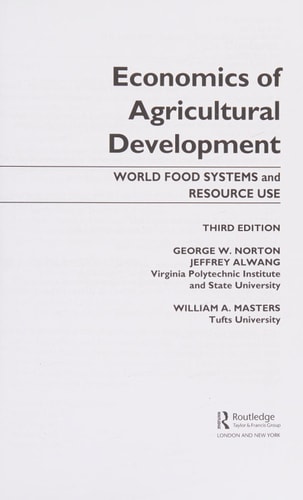
Economics of Agricultural Development
0
0
As an Amazon Associate and affiliate partner, Menrva Books earns from qualifying purchases. Learn more
Author Description
Economics of Agricultural Development examines the causes, severity, and effects of poverty, population growth, and malnutrition in developing countries. It discusses potential solutions to these problems, progress made in many countries in recent years, and the implications of globalization for agriculture, poverty, and the environment. Topics covered in the book include: • Means for utilizing agricultural surpluses to further overall economic development • The sustainability of the natural resource environment • Gender issues in relation to agriculture and resource use • The contribution of agricultural technologies • The importance of agricultural and macroeconomic policies as related to development and trade, and the successes and failures of such policies • Actions to encourage more rapid agricultural and economic development The globalization of trade in goods, services, and capital has been fundamental to changes being experienced in the agricultural and rural sectors of developing countries. It has major implications for the fight against poverty and food insecurity and for environmental sustainability. Recently, agriculture has returned to a position of center stage in the development dialog as food price volatility has increased along with water scarcity, and concerns grow over the effects of climate change on food supply and food security. This new edition of the essential textbook in the field builds on the 2010 edition and reflects the following developments: • Growth in foreign demand for land and other natural resources • Significant progress in agricultural and economic development in some low-income countries while others are being left behind • Continued growth in demand for higher-valued farm products This book is essential reading for undergraduate students seeking to understand the economics of agricultural development and the world food system, including environmental and human consequences, international trade, and capital flows.
Menrva's Summary
THE THESIS
This book investigates the complex interplay of poverty, population growth, and malnutrition in developing nations and proposes economic strategies for agricultural development. It details the causes and severity of these issues, examines potential solutions, and assesses the progress made in various countries, while also considering the pervasive influence of globalization on agriculture, poverty, and the environment.
THE SCOPE MAP
- Means for utilizing agricultural surpluses to further overall economic development
- The sustainability of the natural resource environment
- Gender issues in relation to agriculture and resource use
- The contribution of agricultural technologies
- The importance of agricultural and macroeconomic policies as related to development and trade, and the successes and failures of such policies
- Actions to encourage more rapid agricultural and economic development
- The impact of globalization on trade, poverty, food insecurity, and environmental sustainability
- Recent developments including foreign demand for land, disparities in development progress, and growing demand for higher-valued farm products
THE AUTHORITY PERSPECTIVE
This textbook is considered essential reading for undergraduate students focusing on the economics of agricultural development and the global food system. It addresses critical contemporary issues such as food price volatility, water scarcity, and climate change impacts on food security. The updated edition reflects significant global shifts, including increased foreign demand for natural resources and the diverging development trajectories of low-income countries. Its comprehensive scope makes it a vital resource for understanding the economic, environmental, and human consequences of international trade and capital flows in agriculture.
Page Count:
466
Publication Date:
2014-01-01
Publisher:
Taylor & Francis
ISBN-10:
0415658225
ISBN-13:
9780415658225
Economics
Non-Fiction
Globalization
Food security
Community Tags
Similar Books








Reader Comments
Share Your Thoughts
No comments yet. Be the first to share your thoughts!