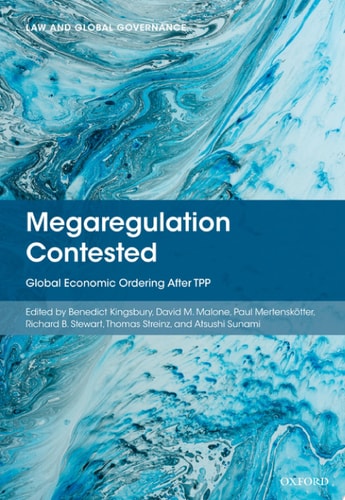
Megaregulation Contested
0
0
As an Amazon Associate and affiliate partner, Menrva Books earns from qualifying purchases. Learn more
Author Description
The Japan-led Trans-pacific Partnership (cptppa) Of 2018 Is The Most Far-reaching 'megaregional' Economic Agreement In Force, With Several Major Countries Beyond Its Eleven Negotiating Countries Also Interested. Still Bearing The Stamp Of The Original Us Involvement Before The Trump-era Reversal, Tpp Is The First Instance Of 'megaregulation': A Demanding Combination Of Inter-state Economic Ordering And National Regulatory Governance On A Highly Ambitious Substantive And Trans-regional Scale. Its Text And Ambition Have Influenced Other Negotiations Ranging From The Japan-eu Agreement (jeepa) And The Us-mexico-canada Agreement (usmca) To The Projected Pan-asian Regional Comprehensive Economic Partnership (rcep). This Book Provides An Extensive Analysis Of Tpp As A Megaregulatory Project For Channelling And Managing New Pressures Of Globalization, And Of Core Critical Arguments Made Against Economic Megaregulation From Standpoints Of Development, Inequality, Labour Rights, Environmental Interests, Corporate Capture, And Elite Governance. Specialized Chapters Cover Supply Chains, Digital Economy, Trade Facilitation, Intellectual Property, Currency Levels, Competition And State-owned Enterprises, Government Procurement, Investment, Prescriptions For National Regulation, And The Tpp Institutions. Country Studies Include Detailed Analyses Of Tpp-related Politics And Approaches In Japan, Mexico, Brazil, China, India, Indonesia, And Thailand. Contributors Include Leading Practitioners And Scholars In Law, Economics, And Political Science. At A Time When The Wto And Other Global-scale Institutions Are Struggling With Economic Nationalism And Geopolitics, And Bilateral And Regional Agreements Are Pressed By Public Disagreement And Incompatibility With Digital And Capital And Value Chain Flows, The Megaregional Ambition Of Tpp Is Increasingly Important As A Precedent Requiring The Close Scrutiny This Book Presents.
Menrva's Summary
THE THESIS
This book investigates the emergence and impact of 'megaregulation' as a new paradigm for international economic governance, specifically through the lens of the Comprehensive and Progressive Agreement for Trans-Pacific Partnership (CPTPP). The authors, a multidisciplinary team of legal scholars, economists, and political scientists, analyze how these large-scale agreements attempt to harmonize national regulatory frameworks with inter-state economic ordering. They argue that while these agreements aim to manage the pressures of modern globalization, they simultaneously face significant criticism regarding their effects on development, labor rights, and democratic accountability.
THE SCOPE MAP
What You Will Find
- Analysis of the CPTPP as a model for future trade agreements like JEEPA, USMCA, and RCEP.
- Examination of specific regulatory domains including digital economy, intellectual property, state-owned enterprises, and supply chain management.
- Comparative country studies focusing on Japan, Mexico, Brazil, China, India, Indonesia, and Thailand.
Scope Limits
- The text does not provide a comprehensive history of all global trade organizations, focusing primarily on the specific mechanism of megaregulation.
- It does not offer prescriptive solutions for resolving current geopolitical tensions, instead focusing on the analytical scrutiny of existing regulatory frameworks.
THE AUTHORITY PERSPECTIVE
Experts identify this work as a rigorous academic examination of the intersection between international trade law and domestic regulatory policy. Readers frequently note the high level of technical detail, making it a valuable resource for scholars and practitioners navigating the complexities of modern regional economic agreements.
Page Count:
704
Publication Date:
2019-01-01
Publisher:
Oxford University Press
ISBN-10:
0192559087
ISBN-13:
9780192559081
Economics
Trade Policy
International Law
Globalization
Public Policy
Community Tags
Similar Books






Reader Comments
Share Your Thoughts
No comments yet. Be the first to share your thoughts!