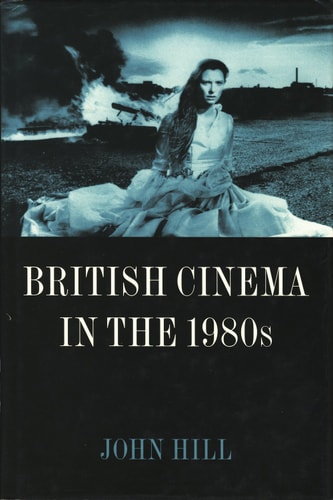
British Cinema in the 1980s: Issues and Themes
0
0
As an Amazon Associate and affiliate partner, Menrva Books earns from qualifying purchases. Learn more
Author Description
In recent years, the role and identity of British Cinema has been changing, and it is these changes with which British cinema in the 1980s is concerned. It looks at the increasing domination of the world film industry by Hollywood and the response of British filmmaking to this, the role of government, and the increasingly close relationship between film and television. It also examines the kinds of images British Cinema produced in this period and how they relate to the shifting sense of `British' identity. The book not only looks at the appeal of images of the past in the heritage film (such as Howard's End) and `films of Empire' (such as A Passage to India) but also discusses the more questioning images of the present by the `state of the nation' film such as Letter to Brezhnev and My Beautiful Laundrette. In doing so, it explores how these films deal with issues of class, gender and ethnicity and how these in turn to connect to our understanding of the `Britishness' of British cinema. British Cinema in the 1980s will become the definitive study of an important period of British filmmaking. Bringing together a discussion of British society, the British film industry and British films, John Hill provides an accessible analysis of the main themes and issues characterizing British cinema of the time.
Menrva's Summary
THE THESIS
How did the shifting political, economic, and social landscape of 1980s Britain redefine the identity and output of its national cinema? John Hill, a scholar of film and media, utilizes a socio-historical framework to analyze the intersection of government policy, the influence of television, and the encroaching dominance of Hollywood. He argues that the films of this decade serve as a mirror to the era's anxieties, specifically regarding class, gender, and the evolving concept of Britishness.
THE SCOPE MAP
What You Will Find
- Analysis of the economic relationship between the British film industry and Hollywood.
- Examination of the symbiotic and often competitive relationship between film and television production.
- Case studies of heritage cinema, such as 'Howards End' and 'A Passage to India'.
- Critical evaluation of 'state of the nation' films like 'Letter to Brezhnev' and 'My Beautiful Laundrette'.
- Exploration of how cinematic representations of class, gender, and ethnicity reflect national identity.
THE AUTHORITY PERSPECTIVE
Experts and film scholars frequently cite this work as a foundational text for understanding the industrial and cultural pressures facing British filmmakers during the Thatcher era. Readers often note the academic rigor of the prose, which balances detailed industry analysis with nuanced cultural criticism.
Page Count:
280
Publication Date:
1999-04-15
Publisher:
Oxford University Press
ISBN-10:
0198119844
ISBN-13:
9780198119845
Cinema History
Great Britain
Sociology
Film Studies
British History
Community Tags
Similar Books


![The Remoter rural areas of Britain: [a symposium held at the University of Newcastle upon Tyne, 1970];](https://storage.googleapis.com/menrva_img_storage/covers/9780050024713.jpg)