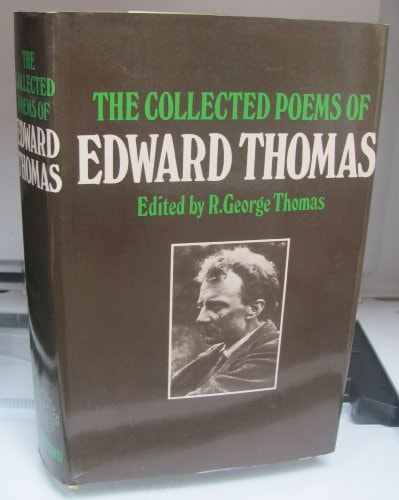
The Collected Poems of Edward Thomas
0
0
As an Amazon Associate and affiliate partner, Menrva Books earns from qualifying purchases. Learn more
Author Description
Since the publication of Walter de la Mare's first edition of his poems in 1920, Edward Thomas has gradually come to be recognised as one of the great English poets of the 20th century.Though sometimes classified with Owen, Rosenberg and Sassoon as a 'war poet', he was rather a poet who died tragically in the war, and whose main subjects were the English countryside and its people, and the solitude of the observing self. The present edition offers the complete poems together with detailed editorial apparatus in what has become acknowledged as the standard edition by R. George Thomas. It also includes Thomas's remarkable prose War Diary of 1917.
Menrva's Summary
THE PULSE
The central conflict involves the tension between the solitary observer's internal landscape and the encroaching reality of a world at war. Edward Thomas navigates the quietude of the English countryside while grappling with the existential weight of his own mortality and the impending loss of the pastoral life he documents. His work functions as a bridge between the traditional nature poetry of the nineteenth century and the stark, modern disillusionment that followed the First World War. The narrative framework is primarily lyrical and introspective, utilizing precise observation to anchor abstract emotional states within the physical geography of rural England.
INSIDE THE PAGES
- Detailed exploration of the English countryside and rural life
- Themes of solitude and the internal life of the observer
- Lyrical verse structures that emphasize natural rhythm
- Inclusion of the 1917 War Diary providing historical context
- Editorial apparatus by R. George Thomas for scholarly reference
- Reflections on the transition from civilian life to military service
- Precise, sensory-driven imagery of flora and landscape
- Examination of the poet's identity within the context of the Great War
THE COLLECTIVE ECHO
Readers and critics frequently highlight the deceptive simplicity of Thomas's verse, noting how his quiet observations often mask profound existential depth. Discussion often centers on his unique position as a poet who captures the essence of the English landscape while simultaneously documenting the psychological toll of the early twentieth century. Many scholars emphasize that while he is often grouped with war poets, his work remains distinct due to its focus on the solitude of the self rather than the mechanics of combat. The inclusion of his prose diary is widely regarded as a vital component for understanding the transition from his nature-focused poetry to his final works written before his death in battle.
Page Count:
486
Publication Date:
1978-11-30
Publisher:
Oxford University Press
ISBN-10:
0198125674
ISBN-13:
9780198125679
Poetry
War poetry
Nature Poetry
20th Century
English literature
Community Tags
Similar Books