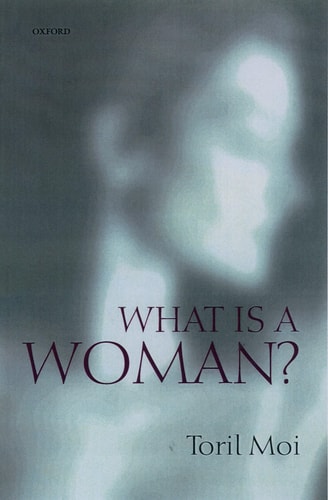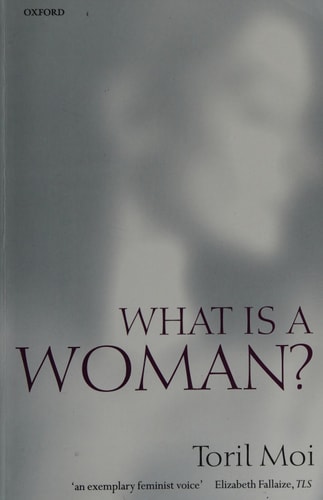
What Is a Woman?: And Other Essays
0
0
As an Amazon Associate and affiliate partner, Menrva Books earns from qualifying purchases. Learn more
Author Description
What is a woman? And what does it mean to be a feminist today? In her first full-scale engagement with feminist theory since her internationally renowned Sexual/Textual Politics (1985), Toril Moi challenges the dominant trends in contemporary feminist and cultural thought, arguing for a feminism of freedom inspired by Simone de Beauvoir's The Second Sex. Written in a clear and engaging style What is a Woman? brings together two brand new book-length theoretical interventions, Moi's work on Freud and Bourdieu, and her studies of desire and knowledge in literature.In the controversial title-essay, Toril Moi radically rethinks current debates about sex, gender, and the body - challenging the commonly held belief that the sex/gender distinction is fundamental to all feminist theory. Moi rejects every attempt to define masculinity and femininity, including efforts to define femininity as that which 'cannot be defined.In the second new book-length essay, 'I am a Woman', Toril Moi reworks the relationship between the personal and the philosophical, pursuing ways to write theory that do not neglect the claims of the personal. Setting up an encounter between contemporary theory and Simone de Beauvoir, Moi radically rethinks the need, and difficulty, of finding one's own philosophical voice by placing it in new theoretical contexts.A sustained refusal to lay down theoretical or political requirements for femininity, and a powerful argument for a feminism of freedom, What is a Woman? is a deeply original contribution to feminist theory.
Menrva's Summary
THE THESIS
This collection investigates the fundamental definitions of sex, gender, and the body while proposing a feminism of freedom rooted in the philosophy of Simone de Beauvoir. Toril Moi, a prominent scholar in literary theory and feminist thought, utilizes her extensive background to critique contemporary trends that rely on the sex/gender distinction. By synthesizing philosophical inquiry with literary analysis, she argues against rigid definitions of femininity and advocates for a more personal, autonomous approach to feminist theory.
THE SCOPE MAP
What You Will Find
- A critical re-evaluation of the sex/gender distinction in contemporary feminist theory.
- Theoretical interventions regarding the works of Sigmund Freud and Pierre Bourdieu.
- An exploration of the intersection between personal experience and philosophical writing.
- A sustained argument for a feminism of freedom inspired by The Second Sex.
THE AUTHORITY PERSPECTIVE
Scholars and students of feminist theory frequently cite this work as a significant challenge to post-structuralist orthodoxy. Readers often note the clarity of the prose, which manages to remain accessible while addressing complex philosophical debates.
Page Count:
544
Publication Date:
2000-01-27
Publisher:
Oxford University Press
ISBN-10:
019812242X
ISBN-13:
9780198122425
Philosophy
Gender Studies
Literary Criticism
Feminism
Women and literature
Feminist Theory
Social Theory
Feminism and literature