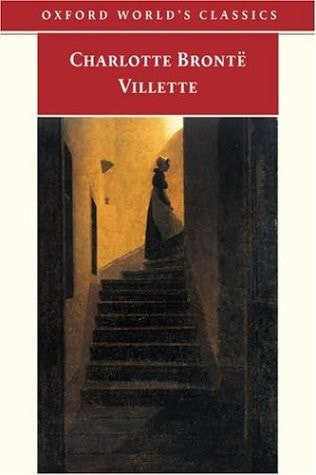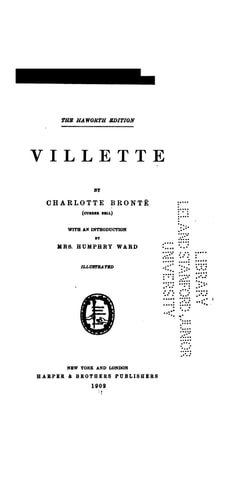
Villette
0
0
As an Amazon Associate and affiliate partner, Menrva Books earns from qualifying purchases. Learn more
Author Description
My godmother lived in a handsome house in the clean and ancient town of Bretton. Her husband's family had been residents there for generations, and bore, indeed, the name of their birthplace-Bretton of Bretton: whether by coincidence, or because some remote ancestor had been a personage of sufficient importance to leave his name to his neighbourhood, I know not.When I was a girl I went to Bretton about twice a year, and well I liked the visit. The house and its inmates specially suited me. The large peaceful rooms, the well-arranged furniture, the clear wide windows, the balcony outside, looking down on a fine antique street, where Sundays and holidays seemed always to abide-so quiet was its atmosphere, so clean its pavement-these things pleased me well.One child in a household of grown people is usually made very much of, and in a quiet way I was a good deal taken notice of by Mrs. Bretton, who had been left a widow, with one son, before I knew her; her husband, a physician, having died while she was yet a young and handsome woman.
Menrva's Summary
THE PULSE
Lucy Snowe, a solitary and impoverished woman, seeks independence and purpose by traveling to the fictional city of Villette to work as a teacher. After enduring a life of displacement and emotional repression, Lucy navigates the complex social hierarchies of a foreign boarding school while grappling with her own guarded nature. She faces opposition from the rigid societal expectations of the time and the volatile personalities of those around her, including the headmistress Madame Beck. The narrative is presented through a first-person perspective, emphasizing Lucy's internal psychological state and her observations of the external world.
INSIDE THE PAGES
- First-person retrospective narration focusing on internal monologue
- Exploration of themes regarding isolation and social alienation
- Detailed depiction of the nineteenth-century educational environment
- Use of unreliable narration to obscure the protagonist's true motivations
- Gothic atmosphere integrated into a realistic setting
- Examination of gender roles and the limited autonomy of women
- Complex character studies of the supporting cast
- Focus on the tension between duty and personal desire
THE COLLECTIVE ECHO
Readers frequently highlight the intense psychological depth of the protagonist as a defining feature of the work. Discussion often centers on the stark contrast between the external social environment and Lucy's private, often turbulent, internal life. Critics often point to the novel's unconventional ending as a point of significant debate regarding the author's intent. The prose is noted for its precision and its ability to capture the nuances of human loneliness within a rigid societal framework.
Page Count:
824
Publication Date:
1985-03-07
Publisher:
Oxford University Press
ISBN-10:
0198125976
ISBN-13:
9780198125976
Romance
Man-woman relationships
Gothic
Victorian
classic
Psychological