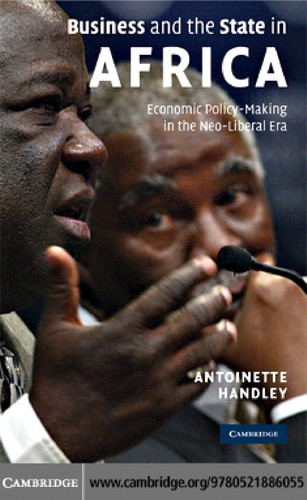
Business and the State in Africa
0
0
As an Amazon Associate and affiliate partner, Menrva Books earns from qualifying purchases. Learn more
Author Description
The dominant developmental approach in Africa over the past twenty years has been to advocate the role of markets and the private sector in restoring economic growth. Recent thinking has also stressed the need for "ownership" of economic reform by the populations of developing countries, particularly the business community. This book studies the business-government interactions of four African countries: Ghana, Zambia, South Africa, and Mauritius. Employing a historical institutionalist approach, Antoinette Handley considers why and how business in South Africa and Mauritius has developed the capacity to constructively contest the making of economic policy while, conversely, business in Zambia and Ghana has struggled to develop any autonomous political capacity. Paying close attention to the mutually constitutive interactions between business and the state, Handley considers the role of timing and how ethnicized and racialized identities can affect these interactions in profound and consequential ways.--Jacket.
Menrva's Summary
THE THESIS
This book investigates the varying capacities of African businesses to engage with and influence state economic policy. Antoinette Handley examines the historical institutionalist frameworks that have shaped business-state interactions in Ghana, Zambia, South Africa, and Mauritius over the past two decades. The study contrasts the constructive policy contestation seen in South Africa and Mauritius with the limited autonomous political capacity of businesses in Zambia and Ghana, exploring the profound impact of timing and identity politics on these relationships.
THE SCOPE MAP
- Comparative analysis of business-state interactions in Ghana, Zambia, South Africa, and Mauritius.
- Application of a historical institutionalist approach to understand policy development.
- Examination of the factors enabling constructive policy contestation by businesses.
- Analysis of the reasons for limited autonomous political capacity in certain business sectors.
- Exploration of the role of timing in shaping business-state relationships.
- Consideration of how ethnic and racialized identities influence economic policy interactions.
THE AUTHORITY PERSPECTIVE
The book is recognized for its rigorous historical institutionalist approach to understanding the complex relationship between business and the state in Africa. It offers a nuanced comparative study, highlighting why some African businesses have developed significant capacity to influence economic policy while others have not. The analysis of timing and identity politics provides critical insights into the divergent developmental trajectories observed in the case study countries. This work is valuable for scholars and policymakers interested in African political economy and development.
Page Count:
292
Publication Date:
2008-01-01
ISBN-10:
0521886058
ISBN-13:
9780521886055
Business
Non-Fiction
History
Politics
Government Policy
Community Tags
Similar Books