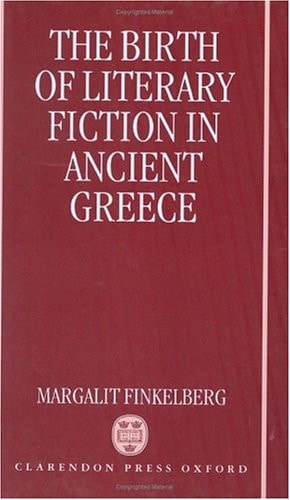
The Birth of Literary Fiction in Ancient Greece
0
0
As an Amazon Associate and affiliate partner, Menrva Books earns from qualifying purchases. Learn more
Author Description
The purpose of this study is to find out how and why the "poetics of fiction" arose, its sources, and the materials from which it was created. A series of cultural choices made in archaic and classical Greece produced a clash between the traditional "poetics of truth", which derived poetry from divine inspiration and in the last analysis did not construe the poem as a work of art at all, and the new "poetics of fiction", which derived poetry from art. The eventual succession of the latter, culminating with the Poetics of Aristotle, amounted to an aesthetic revolution because, as a result of it, literary fiction, which since then has become a necessary framework for both the theory and practice of literature in Western tradition, was for the first time separated from non-fiction and given a status of its own.
Menrva's Summary
THE THESIS
This study investigates the historical and cultural origins of the concept of literary fiction within the context of Ancient Greece. Margalit Finkelberg, a scholar of classical literature, examines the transition from the archaic 'poetics of truth'—where poetry was viewed as divinely inspired—to the 'poetics of fiction' that emerged during the classical period. By analyzing the evolution of aesthetic thought, the author argues that this shift represents a fundamental revolution that established the modern distinction between fictional and non-fictional discourse.
THE SCOPE MAP
What You Will Find
- Analysis of the transition from archaic divine inspiration to classical artistic creation.
- Examination of the philosophical shift leading to Aristotle's Poetics.
- Historical survey of cultural choices in Ancient Greece regarding poetic function.
- Theoretical framework for the separation of literature from non-fictional accounts.
THE AUTHORITY PERSPECTIVE
Scholars and classicists frequently cite this work as a rigorous exploration of the intellectual foundations of Western literary theory. Readers often note the academic density of the prose, which provides a foundational understanding of how ancient aesthetic shifts continue to influence modern literary practice.
Page Count:
240
Publication Date:
1998-06-25
Publisher:
Clarendon Press
ISBN-10:
0198150954
ISBN-13:
9780198150954
History
Philosophy
Greece
Homer
Criticism history
Literary Criticism
Literary Form
Ancient Greece
Community Tags
Similar Books