Nixon, Kissinger, and U.S. Foreign Policy Making
0
0
As an Amazon Associate and affiliate partner, Menrva Books earns from qualifying purchases. Learn more
Author Description
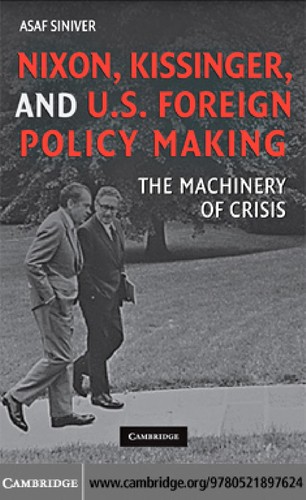
"Nixon, Kissinger, and U.S. Foreign Policy Making examines for the first time the important role of crisis management in the making of U.S. foreign policy during the Nixon-Kissinger years. The book offers a critical account of the manner in which the president and his national security advisor - notorious for their tight grip on the machinery of U.S. foreign policy - dominated the structures and processes of foreign policy making."--Jacket. "The Machinery of Crisis examines for the first time the important role of crisis management in the making of U.S. foreign policy during the Nixon-Kissinger years. Notorious for their tight grip on the machinery of U.S. foreign policy, the book offers a critical account of the manner in which the president and his national security advisor dominated the structures and processes of foreign policy making. By drawing on a wealth of previously classified documents, Siniver reveals the story of the Washington Special Action Group, which managed foreign policy crises in the Nixon administration. In this thoroughly researched account of the performance of Nixon, Kissinger and the Washington Special Actions group in four international crises, Siniver provides a fresh analysis of the important relationship between individuals and the advisory system in the making of U.S. foreign policy during international crisis."--Publisher's description.
Menrva's Summary
THE THESIS
This book investigates the critical role of crisis management in shaping U.S. foreign policy during the Nixon and Kissinger administrations. It offers a detailed examination of how President Nixon and National Security Advisor Henry Kissinger exerted significant control over foreign policy structures and processes. Drawing on declassified documents, the work analyzes the Washington Special Action Group's role in managing international crises and provides a fresh perspective on the interplay between key individuals and the advisory system during these critical junctures.
THE SCOPE MAP
- What You Will Find:
- The central role of crisis management in U.S. foreign policy during the Nixon-Kissinger years.
- The dominance of President Nixon and Henry Kissinger over foreign policy structures and processes.
- An analysis of the Washington Special Action Group and its function in managing international crises.
- A detailed examination of four specific international crises managed by the Nixon administration.
- Insights into the relationship between individuals and the advisory system in foreign policy decision-making.
- Extensive use of previously classified documents to support the analysis.
THE AUTHORITY PERSPECTIVE
The book is recognized for its thorough research and critical account of foreign policy making during a pivotal period in U.S. history. By focusing on crisis management and the specific mechanisms employed by Nixon and Kissinger, it provides a unique perspective on their tight control over foreign policy. The utilization of declassified documents allows for a deep dive into the operations of the Washington Special Action Group. This work offers a fresh analysis of the dynamics between leadership and advisory systems when navigating international crises.
Page Count:
252
Publication Date:
2008-01-01
ISBN-10:
0521897629
ISBN-13:
9780521897624
Politics
Non-Fiction
History
International relations
Community Tags
Similar Books