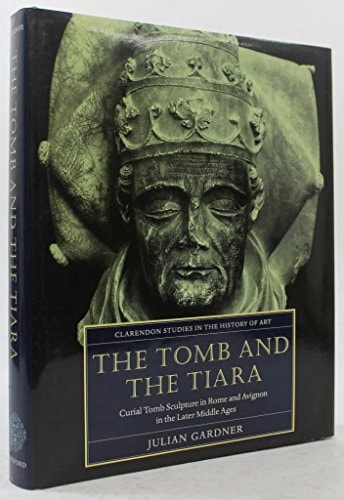
The Tomb and the Tiara: Curial Tomb Sculpture in Rome and Avignon in the Later Middle Ages
0
0
As an Amazon Associate and affiliate partner, Menrva Books earns from qualifying purchases. Learn more
Author Description
The first history of tomb sculpture, this book spans the shift of the papacy and college of cardinals from Rome to Avignon. Too often there has been a concentration on the work of individual sculptors, based on more or less tenable attributions, however, Gardner discusses the surviving or documented tombs of popes, cardinals, and important clerics in Rome and central Italy from the viewpoints of style, context, funerary custom, and testamentary wishes. The transference of the papacy to Avignon brought with it radical changes in the personnel, burial traditions, and artistic environment of the papal curia, and Paris, Westminster, and Toulouse became points of reference. Important surviving tombs at Limoges, Montpezat, Toledo, and Prague are brought into the ambit of papal tomb sculpture, and the effect of Roman sculpture with the absence of the papacy is considered, together with the problem of sepulchal portraiture.
Menrva's Summary
THE THESIS
This work investigates how the relocation of the papacy from Rome to Avignon during the later Middle Ages fundamentally altered the traditions, artistic styles, and funerary customs of curial tomb sculpture. Julian W. Gardner, an established scholar in medieval art, synthesizes archival documentation and surviving physical evidence to argue that papal burial practices were not merely the result of individual artistic choices but were deeply influenced by shifting political landscapes and ecclesiastical environments. By examining the tombs of popes, cardinals, and high-ranking clerics, the author provides a comprehensive framework for understanding how these monuments functioned as expressions of power and theological identity within a changing European context.
THE SCOPE MAP
What You Will Find
- Comparative analysis of funerary monuments in Rome, Avignon, Limoges, Toledo, and Prague.
- Examination of the impact of the papal curia's migration on artistic production and burial traditions.
- Discussion of the role of testamentary wishes and funerary customs in shaping sculptural design.
- Analysis of the evolution of sepulchral portraiture and its relationship to the absence of the papacy in Rome.
THE AUTHORITY PERSPECTIVE
Experts recognize this volume as a foundational study for understanding the intersection of ecclesiastical politics and medieval art history. Scholars frequently cite the text for its rigorous methodology in connecting documented historical shifts to the physical evolution of funerary sculpture.
Page Count:
320
Publication Date:
1992-06-11
Publisher:
Oxford University Press
ISBN-10:
0198175108
ISBN-13:
9780198175100
Cardinals
Sculpture
European History
Religious History
Popes
Art History
Community Tags
Similar Books