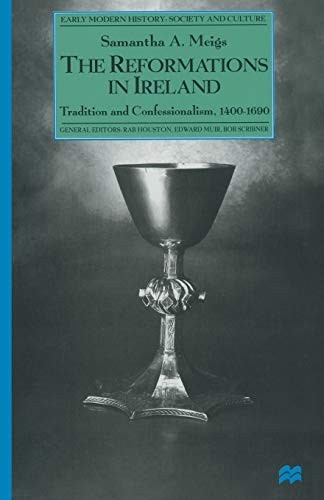
The Reformations in Ireland
0
0
As an Amazon Associate and affiliate partner, Menrva Books earns from qualifying purchases. Learn more
Author Description
Why was Ireland the only region in Europe which successfully rejected a state-imposed religion during the confessional era? This book argues that the anomalous outcome of the Reformations in Ireland was largely due to an unusual symbiosis between the Church and the old bardic order. Using sources ranging from Gaelic poetry to Jesuit correspondence, this study examines Irish religiosity in a European context, showing how the persistence of traditional culture enabled local elites to resist external pressures for reform.
Menrva's Summary
THE THESIS
This book investigates why Ireland uniquely resisted state-imposed religion during Europe's confessional era. It posits that the success of this resistance stemmed from a unique partnership between the established church and the ancient bardic order. By analyzing a diverse range of sources, including Gaelic poetry and Jesuit communications, the study places Irish religiosity within a broader European framework. The central argument is that the resilience of indigenous culture empowered local leaders to withstand external demands for religious change.
THE SCOPE MAP
- What You Will Find:
- Analysis of the unique outcome of the Reformations in Ireland compared to other European regions.
- Examination of the symbiosis between the Church and the old bardic order in Ireland.
- Use of diverse primary sources, including Gaelic poetry and Jesuit correspondence.
- Exploration of Irish religiosity within a broader European historical context.
- Demonstration of how traditional culture enabled local elites to resist external religious pressures.
THE AUTHORITY PERSPECTIVE
The book is presented as a scholarly examination of a specific historical anomaly. Its approach, utilizing a wide array of sources from Gaelic poetry to Jesuit correspondence, suggests a detailed and nuanced analysis. The argument that traditional culture played a key role in resisting external religious pressures positions it as a significant contribution to the understanding of Irish and European religious history. The focus on local elites and their agency in navigating confessional pressures indicates a deep dive into the socio-cultural dynamics of the period.
Page Count:
221
Publication Date:
1997-01-01
ISBN-10:
1349257125
ISBN-13:
9781349257126
Non-Fiction
Religion
History
Religious History
European History
Irish History
Community Tags
Similar Books