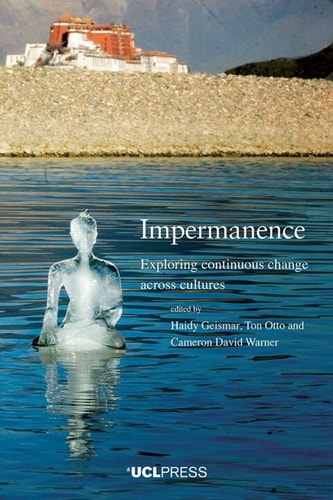
Impermanence Exploring Continuous Change Across Cultures
0
0
As an Amazon Associate and affiliate partner, Menrva Books earns from qualifying purchases. Learn more
Author Description
Nothing lasts forever. This common experience is the source of much anxiety but also hope. The concept of impermanence or continuous change opens up a range of timely questions and discussions that speak to globally shared experiences of transformation and concerns for the future. Impermanence engages with an emergent body of social theory emphasizing flux and transformation, and brings this into a dialogue with other traditions of thought and practice, notably Buddhism that has sustained a long-lasting and sophisticated meditation on impermanence. In cases drawn from all over the world, this volume investigates the significance of impermanence in such diverse contexts as social death, atheism, alcoholism, migration, ritual, fashion, oncology, museums, cultural heritage and art. The authors draw on a wide range of disciplines, including anthropology, archaeology, art history, Buddhist studies, cultural geography and museology. This volume also includes numerous photographs, artworks and poems that evocatively communicate notions and experiences of impermanence. Praise for Impermanence 'This collection of multi-disciplinary case studies takes an exciting comparative view of how impermanence is experienced in cultures and societies across the globe.' Religious Studies Review 'All chapters are well annotated and come with an extensive bibliography that seasoned scholars, as well as students interested in social theory, anthropology, philosophy, and Buddhist studies, will find very useful. Even general readers might find some of the essays interesting. Each chapter has comprehensive explanatory notes and is wellreferenced and the volume also has an index which is equally helpful to wade through key concepts and unfamiliar names. This book undoubtedly deserves a place in all university libraries.' Journal of World Buddhist Cultures ‘Impermanence? Nothing in life can originate or grow without other things’ perishing. But to call this “impermanence” is to pit the passage o
Page Count:
341
Publication Date:
2022-01-01
Publisher:
UCL Press
ISBN-10:
1787358720
ISBN-13:
9781787358720
Community Tags
Other Editions(2)
Reader Comments
Share Your Thoughts
No comments yet. Be the first to share your thoughts!