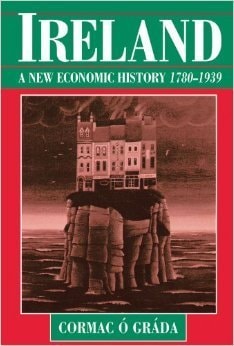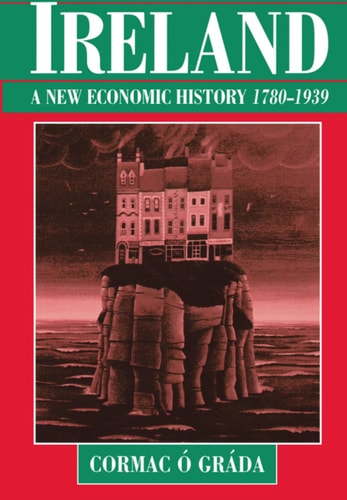
Ireland: A New Economic History, 1780-1939
0
0
As an Amazon Associate and affiliate partner, Menrva Books earns from qualifying purchases. Learn more
Author Description
Cormac Ö Gráda unites historical research with economic theory in this original and stimulating book, which will be essential reading for all students of Irish history. Within a broadly chronological framework, Ireland offers a fresh, comprehensive examination of all the well-known puzzles of Irish economic history including the inevitability of the Famine, the role of land tenure in agricultural backwardness, and the failure of the economy to industrialize. O'Gráda's account is both accessible, with technical discussion kept to a minimum, and intellectually exciting.
Menrva's Summary
THE THESIS
This work investigates the primary drivers and structural constraints of the Irish economy during the transformative period between 1780 and 1939. Cormac Ó Gráda, a distinguished economic historian, synthesizes archival research with modern economic theory to re-examine long-standing questions regarding Ireland's development. By moving beyond traditional narratives, the author provides a rigorous framework for understanding the interplay between land tenure, agricultural practices, and the limitations of industrialization in the Irish context.
THE SCOPE MAP
What You Will Find
- Analysis of the economic factors contributing to the Great Famine.
- Examination of land tenure systems and their impact on agricultural productivity.
- Discussion of the structural barriers preventing widespread industrialization.
- A chronological overview of Irish economic performance from the late 18th to the early 20th century.
THE AUTHORITY PERSPECTIVE
Scholars and students of Irish history frequently cite this text as a foundational resource for its ability to balance technical economic analysis with accessible historical narrative. Experts highlight the work for its clear methodology and its success in demystifying complex economic puzzles within the Irish experience.
Page Count:
552
Publication Date:
1995-07-13
Publisher:
Clarendon Press
ISBN-10:
0198205988
ISBN-13:
9780198205982
History
Economics
Ireland
Economic History
European History