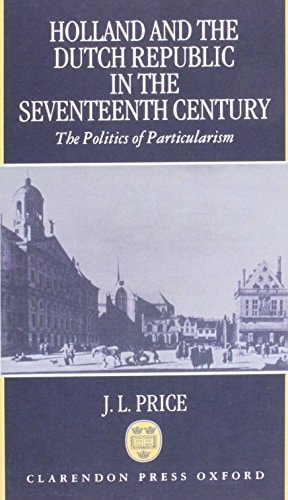
Holland and the Dutch Republic in the Seventeenth Century: The Politics of Particularism
0
0
As an Amazon Associate and affiliate partner, Menrva Books earns from qualifying purchases. Learn more
Author Description
This original, scholarly, and challenging analysis treats the reality of politics in the Dutch Republic from the ground up. J.L. Price explores the politics of the towns of Holland in detail, examines the province's political system, and assesses the ways in which Holland influenced the policies of the Dutch Republic in its Golden Age. He argues, controversially, that not only did the decentralized political system of the Republic work well, but that a more unified state would have been a failure. Price's novel approach to a complex and important subject sets politics in its economic and social context, and offers valuable insights into the practical politics of the Dutch during the period when they played a major role on the world stage.
Menrva's Summary
THE THESIS
This work investigates the core question of how the decentralized political structure of the Dutch Republic functioned effectively during its seventeenth-century Golden Age. J. L. Price, a recognized scholar in Dutch history, utilizes a bottom-up analytical framework to examine the political mechanics of Holland's towns and their influence on the broader Republic. He challenges traditional historiography by arguing that the Republic's particularism was not a weakness, but a functional system that prevented the failures associated with more centralized European states of the era.
THE SCOPE MAP
What You Will Find
- Detailed analysis of the political systems within the towns of Holland.
- Examination of the relationship between local municipal governance and provincial influence.
- Integration of economic and social contexts into the study of political decision-making.
- A revisionist argument regarding the viability of decentralized state structures in the seventeenth century.
THE AUTHORITY PERSPECTIVE
Historians and scholars of early modern Europe frequently cite this text for its rigorous challenge to conventional views on state centralization. Readers often note the academic density of the prose, which provides a sophisticated look at the practical realities of Dutch governance during a period of global prominence.
Page Count:
320
Publication Date:
1994-04-28
Publisher:
Clarendon Press
ISBN-10:
0198203837
ISBN-13:
9780198203834
History
Netherlands
European History
Politics & Government
Netherlands history
Community Tags
Similar Books