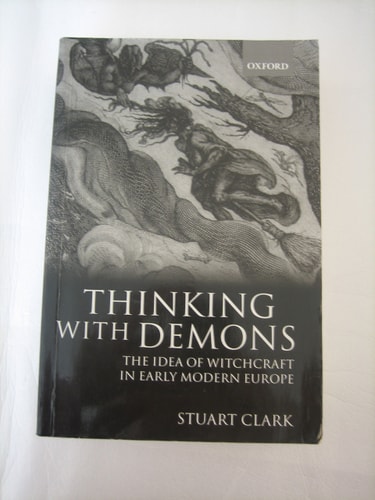
Thinking with Demons: The Idea of Witchcraft in Early Modern Europe
0
0
As an Amazon Associate and affiliate partner, Menrva Books earns from qualifying purchases. Learn more
Author Description
This major work offers a new interpretation of the witchcraft beliefs of European intellectuals between the fifteenth and eighteenth centuries, showing how these beliefs fitted rationally with other beliefs of the period and how far the nature of rationality is dependent on its historical context.
Menrva's Summary
THE THESIS
This work investigates how the belief in witchcraft functioned as a rational component of the intellectual framework of early modern Europe. Stuart Clark, a distinguished historian of early modern culture, utilizes an extensive analysis of primary source texts from the fifteenth to the eighteenth centuries to argue that witchcraft was not an irrational superstition but rather a logical extension of the period's scientific, religious, and philosophical paradigms. By situating these beliefs within their specific historical context, the author demonstrates how intellectual systems of the time integrated demonology into their broader understanding of the natural and supernatural worlds.
THE SCOPE MAP
What You Will Find
- A comprehensive analysis of intellectual discourse on witchcraft across three centuries.
- A methodological framework for understanding historical rationality and belief systems.
- Extensive examination of primary source documents, including theological, legal, and scientific treatises.
- An exploration of the relationship between demonology and the development of early modern science.
THE AUTHORITY PERSPECTIVE
Scholars and historians widely recognize this text as a foundational study for understanding the intellectual history of early modern Europe. Readers frequently note the significant academic density of the prose, which provides a rigorous and exhaustive examination of the subject matter.
Page Count:
850
Publication Date:
1999-11-25
Publisher:
Oxford University Press
ISBN-10:
0198208081
ISBN-13:
9780198208082
History
Philosophy
Intellectual History
European History
Witchcraft
Community Tags
Similar Books