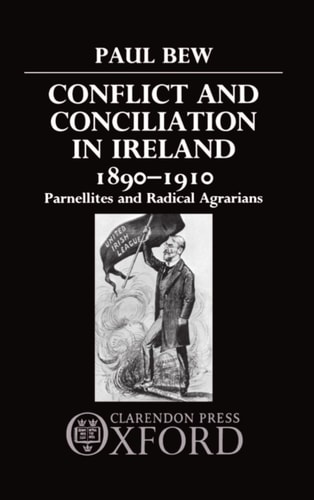
Conflict and Conciliation in Ireland 1890-1910: Parnellites and Radical Agrarians
0
0
As an Amazon Associate and affiliate partner, Menrva Books earns from qualifying purchases. Learn more
Author Description
This book explores the evolution of Irish constitutional nationalism from the fall of Parnell to the rise of Sinn Fein, when the two competing wings of conciliators and militants struggled bitterly for control of the movement. The author, stressing the grass roots dimensions of this rift, shows that while the advocates of conciliation took a peaceful path, striving to achieve a modus vivendi with the protestants who opposed home rule, the supporters of militancy stressed the need for vigilance and strict maintenance of the Catholic nationalist tradition.
Menrva's Summary
THE THESIS
This work investigates the internal ideological fracture within Irish constitutional nationalism between 1890 and 1910, specifically examining the tension between conciliatory and militant factions. Paul Bew, a noted historian of Irish politics, utilizes primary source documentation and socio-political analysis to argue that the movement's trajectory was shaped as much by grass-roots agrarian pressures as by high-level parliamentary maneuvering. The text provides a rigorous framework for understanding how the collapse of the Parnellite consensus necessitated a redefinition of nationalist identity in the lead-up to the rise of Sinn Fein.
THE SCOPE MAP
What You Will Find
- Analysis of the post-Parnell political landscape in Ireland.
- Examination of the agrarian roots of the conflict between constitutionalists and militants.
- Evaluation of the relationship between Irish nationalists and the Protestant minority.
- Historical documentation regarding the transition from the Irish Parliamentary Party to the emergence of radical nationalist movements.
THE AUTHORITY PERSPECTIVE
Historians frequently cite this text as a foundational study for understanding the complexities of Irish political evolution during the late nineteenth and early twentieth centuries. Scholars often note the precision of Bew's analysis regarding the intersection of land reform and national identity.
Page Count:
240
Publication Date:
1987-06-18
Publisher:
Clarendon Press
ISBN-10:
0198227582
ISBN-13:
9780198227588
History
European History
Nationalism
Politics & Government
Irish History
Community Tags
Similar Books