Doctor Who: The Unfolding Text
0
0
As an Amazon Associate and affiliate partner, Menrva Books earns from qualifying purchases. Learn more
Author Description
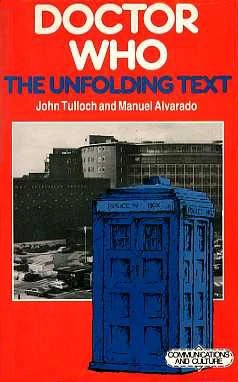
On Saturday, 23 November 1963 at 5.25 p.m. the Doctor Who theme music was heard on BBC television for the first time, and just under twelve minutes later William Hartnell appeared through the London fog as the first Doctor. It was the birth of an institution. Doctor Who: The Unfolding Text is the first serious analysis of the BBC's longest-running fictional programme. Based on interviews with artists and production staff involved with the programme since 1963, it investigates how industrial, institutional, narrative, professional and other forces originally existing outside Doctor Who have operated to shape the series. It examines the programme's origins in the BBC's attempt to compete with commercial television, and its ability to draw on a variety of codes of performance as well as a range of genres. The reason for Doctor Who's continuing popularity and success, argue the authors, is its flexible structure — time can range over millions of years, the Doctor's companions can be replaced and even the Doctor himself can change form. Doctor Who: The Unfolding Text elucidates through practical demonstration analytical approaches for the student and teacher of media studies, offers valuable information for the fan, and provides intriguing insight for the general reader into the adventures of television's most famous time-lord. John Tulloch is Associate Professor of Mass Communications, Macquarie University, Sydney, Australia. His publications include Conflict and Control in the Cinema (editor, 1977) and Australian Cinema: Industry, Narrative and Meaning (1982). He is Editor of the Australian Journal of Screen Theory. Manuel Alvarado is Lecturer in Television and Film, University of London Institute of Education. His publications include Hazell: The Making of a TV Series (with Edward Buscombe, 1978)
Menrva's Summary
THE THESIS
This book provides the first serious analysis of the BBC's longest-running fictional program, Doctor Who.
Drawing on interviews with artists and production staff, it investigates the external forces that have shaped the series since its inception in 1963. The analysis examines the program's origins within the BBC's competitive strategy against commercial television and its capacity to integrate diverse performance codes and genres. The authors posit that Doctor Who's enduring popularity stems from its inherently flexible structure, allowing for vast temporal scope, interchangeable companions, and even a regenerating Doctor.
THE SCOPE MAP
- Analysis of Doctor Who's origins and its role in BBC's competition with commercial television.
- Examination of the industrial, institutional, and professional forces shaping the series.
- Investigation into the narrative codes and genre influences on Doctor Who.
- Interviews with artists and production staff involved since 1963.
- Discussion of the program's flexible structure as a key to its longevity.
- Exploration of the Doctor's ability to change form and companions.
- Demonstration of analytical approaches for media studies students and teachers.
- Insights for fans and general readers into the television program.
THE AUTHORITY PERSPECTIVE
The book is presented as a foundational text for media studies, offering valuable information for both dedicated fans and general readers interested in television analysis. Its approach, grounded in interviews with those involved in the program's creation and evolution, aims to elucidate the complex interplay of factors contributing to Doctor Who's sustained success. The authors' argument centers on the program's structural flexibility as the primary driver of its enduring appeal across decades. This work serves as a practical demonstration of analytical methods applicable to television studies.
Page Count:
342
Publication Date:
1983-01-01
ISBN-10:
0333348478
ISBN-13:
9780333348475
Non-Fiction
Media Studies