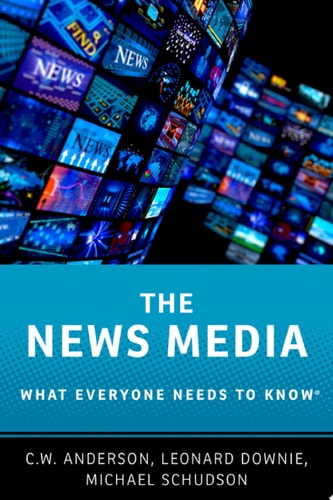
The News Media: What Everyone Needs to Know
0
0
As an Amazon Associate and affiliate partner, Menrva Books earns from qualifying purchases. Learn more
Author Description
The business of journalism has an extensive, storied, and often romanticized history. Newspaper reporting has long shaped the way that we see the world, played key roles in exposing scandals, and has even been alleged to influence international policy. The past several years have seen the newspaper industry in a state of crisis, with Twitter and Facebook ushering in the rise of citizen journalism and a deprofessionalization of the industry, plummeting readership and revenue, and municipal and regional papers shuttering or being absorbed into corporate behemoths. Now billionaires, most with no journalism experience but lots of power and strong views, are stepping in to purchase newspapers, both large and small. This addition to the What Everyone Needs to Know® series looks at the past, present and future of journalism, considering how the development of the industry has shaped the present and how we can expect the future to roll out. It addresses a wide range of questions, from whether objectivity was only a conceit of late twentieth century reporting, largely behind us now; how digital technology has disrupted journalism; whether newspapers are already dead to the role of non-profit journalism; the meaning of "transparency" in reporting; the way that private interests and governments have created their own advocacy journalism; whether social media is changing journalism; the new social rules of old media outlets; how franchised media is addressing the problem of disappearing local papers; and the rise of citizen journalism and hacker journalism. It will even look at the ways in which new technologies potentially threaten to replace journalists.
Menrva's Summary
THE THESIS
How has the rapid evolution of digital technology and shifting economic models fundamentally altered the role and integrity of the news media in modern society? The authors, C.W. Anderson, Leonard Downie Jr., and Michael Schudson, draw upon their extensive backgrounds in media research and professional journalism to analyze the transition from traditional newspaper reporting to the current fragmented digital landscape. They present a framework that evaluates the impact of corporate ownership, social media, and citizen journalism on the public's access to reliable information.
THE SCOPE MAP
What You Will Find
- Historical analysis of the newspaper industry's rise and current decline
- Examination of the impact of digital platforms like Twitter and Facebook on news dissemination
- Discussion on the role of non-profit journalism and private ownership in local news
- Evaluation of concepts such as objectivity, transparency, and the rise of hacker journalism
Scope Limits
- Does not provide a comprehensive technical manual for digital news production
- Does not offer a definitive prediction for the survival of specific media outlets
THE AUTHORITY PERSPECTIVE
Experts recognize this text as a foundational overview for understanding the structural shifts within the journalism industry. Readers frequently note the accessibility of the prose, which effectively synthesizes complex media theory for a general audience.
Page Count:
200
Publication Date:
2016-01-01
Publisher:
Oxford University Press
ISBN-10:
0190206225
ISBN-13:
9780190206222
Non-Fiction
Mass Communication
Technology
Sociology
Media Studies
United States
Communications
Journalism
Communication
Introduction to Human Communication
Community Tags
Other Editions(2)
Similar Books




Reader Comments
Share Your Thoughts
No comments yet. Be the first to share your thoughts!