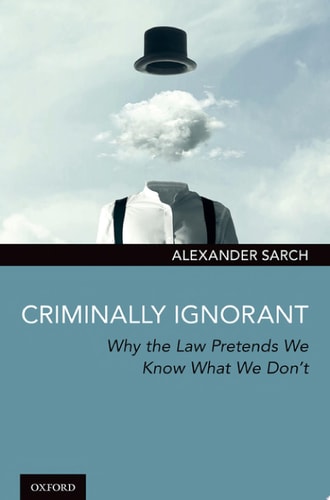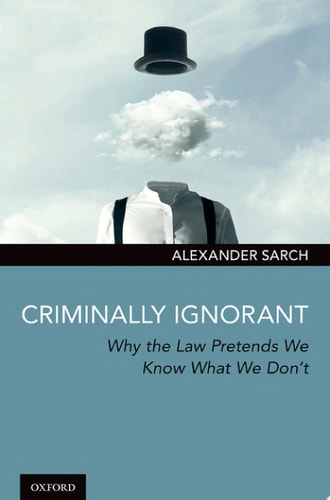
Criminally Ignorant
0
0
As an Amazon Associate and affiliate partner, Menrva Books earns from qualifying purchases. Learn more
Author Description
This Is A Book About The Legal Fiction That Sometimes We Know What We Don't. The Willful Ignorance Doctrine Says Defendants Who Bury Their Heads In The Sand Rather Than Learn They're Doing Something Criminal Are Punished As If They Knew. Not All Legal Fictions Are Unjustified, However. This One, Used Within Proper Limits, Is A Defensible Way To Promote The Aims Of The Criminal Law. Preserving Your Ignorance Can Make You As Culpable As If You Knew What You Were Doing, And So The Interests And Values Protected By The Criminal Law Can Be Promoted By Treating You As If You Had Knowledge. This Book Provides A Careful Defense Of This Method Of Imputing Mental States Based On Equal Culpability. On The One Hand, The Theory Developed Here Shows Why The Willful Ignorance Doctrine Is Only Partly Justified And Requires Reform. On The Other Hand, It Demonstrates That The Criminal Law Needs More Legal Fictions Of This Kind. Repeated Indifference To The Truth May Substitute For Knowledge, And Very Culpable Failures To Recognize Risks Can Support Treating You As If You Took Those Risks Consciously. Moreover, Equal Culpability Imputation Should Also Be Applied To Corporations, Not Just Individuals. Still, Such Imputation Can Be Taken Too Far. We Need To Determine Its Limits To Avoid Injustice. Thus, The Book Seeks To Place Equal Culpability Imputation On A Solid Normative Foundation, While Demarcating Its Proper Boundaries. The Resulting Theory Of When And Why The Criminal Law Can Pretend We Know What We Don't Has Far-reaching Implications For Legal Practice And Reveals A Pressing Need For Reform.
Menrva's Summary
THE THESIS
This book investigates the normative foundations and practical limitations of the willful ignorance doctrine in criminal law. Dr. Alexander Sarch, a scholar of legal philosophy, examines the legal fiction that allows courts to treat defendants as having knowledge of criminal activity when they have intentionally avoided learning the truth. The author argues that while this doctrine is a defensible mechanism for promoting the aims of criminal law, it is currently applied inconsistently and requires significant reform to align with principles of equal culpability.
THE SCOPE MAP
What You Will Find
- A normative framework for evaluating when legal fictions are justified in criminal proceedings.
- An analysis of how 'equal culpability imputation' applies to both individual defendants and corporate entities.
- A critical review of current judicial standards regarding willful blindness and risk recognition.
Scope Limits
- The text does not provide a comprehensive survey of international criminal law, focusing primarily on the American legal context.
- The book does not offer a practical handbook for trial attorneys, but rather a theoretical analysis for legal scholars and policymakers.
THE AUTHORITY PERSPECTIVE
Legal scholars and practitioners frequently note the academic density of the prose, which is tailored for those with a background in jurisprudence or criminal law theory. Experts highlight this as a significant contribution to the debate on mental state imputation and the ethical boundaries of legal fictions.
Page Count:
288
Publication Date:
2019-01-01
Publisher:
Oxford University Press
ISBN-10:
0190056584
ISBN-13:
9780190056582
Corporate Law
Ethics
Criminal Law
Law
Jurisprudence
Legal Theory
Community Tags
Similar Books