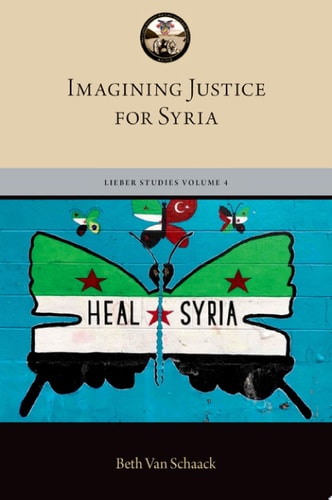
Imagining Justice for Syria: Water Always Finds its Way
0
0
As an Amazon Associate and affiliate partner, Menrva Books earns from qualifying purchases. Learn more
Author Description
This book situates the war in Syria within the actual and imagined system of international criminal justice. It explores the legal impediments and diplomatic challenges that have led to the fatal trinity affecting Syria: the massive commission of international crimes that are subject to detailed investigations and documentation but whose perpetrators have enjoyed virtually complete impunity. Given this tragic state of affairs, the book tracks a number of accountability solutions being explored within multilateral initiatives and by civil society actors, including innovations of institutional design; the renewed utility of a range of domestic jurisdictional principles (including the revival of universal jurisdiction in Europe); the emergence of creative investigative and documentation techniques, technologies, and organizations; and the rejection of state consent as a precondition for the exercise of jurisdiction. Engaging both law and policy around international justice, the text offers a set of justice blueprints, within and without the International Criminal Court. It also considers the utility, propriety, and practicality of pursuing a transitional justice program without a genuine political transition. All told, the book attempts to capture results of the creative energy radiating from members of the international community intent on advancing the accountability norm in Syria even in the face of geopolitical blockages within the U.N. Security Council. In so doing, it presents the range of juridical measures-both criminal and civil - that would be available to the international community to respond to the crisis, if only the political will existed.
Menrva's Summary
THE THESIS
This book investigates how the international community can pursue accountability for war crimes in Syria despite significant geopolitical obstacles and the absence of state consent. Beth Van Schaack, a scholar and practitioner in international criminal law, utilizes a comprehensive analysis of legal frameworks and diplomatic history to evaluate the effectiveness of various justice mechanisms. She argues that while traditional avenues like the International Criminal Court face systemic blockages, alternative jurisdictional principles and innovative documentation techniques provide viable pathways for seeking justice.
THE SCOPE MAP
What You Will Find
- Analysis of universal jurisdiction applications in European courts.
- Evaluation of institutional design innovations for international accountability.
- Examination of documentation techniques and technologies used by civil society.
- Discussion on the feasibility of transitional justice without political transition.
Scope Limits
- The text does not provide a definitive resolution to the Syrian conflict itself.
- It does not offer a singular, guaranteed legal strategy for immediate prosecution.
THE AUTHORITY PERSPECTIVE
Experts recognize this work as a rigorous examination of the intersection between international law and real-world diplomatic constraints. Readers frequently note the academic density of the prose, which serves as a foundational resource for those studying the practical application of international justice in modern conflict zones.
Page Count:
492
Publication Date:
2019-01-01
Publisher:
Oxford University Press
ISBN-10:
0190055995
ISBN-13:
9780190055998
Syrian Conflict
International Law
Human rights
International Criminal Justice
Transitional Justice
Professional Career & Trade
Community Tags
Similar Books