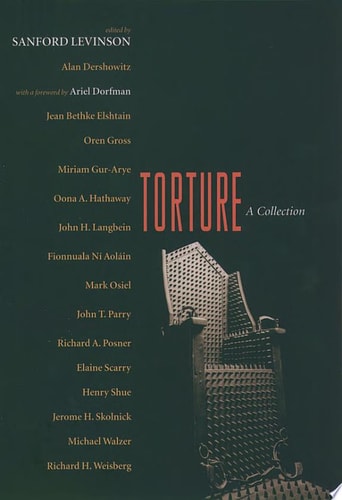
Torture: A Collection
0
0
As an Amazon Associate and affiliate partner, Menrva Books earns from qualifying purchases. Learn more
Author Description
Torture is perhaps the most unequivocally banned practice in the world today. Yet within six weeks after September 11, articles began appearing suggesting that torture might be "required" in order to interrogate suspected terrorists about future possibilities of violence. The United States and some of its allies are using methods of questioning relating to the war on terrorism that could be described as torture or, at the very least, as inhuman and degrading. It is known that the United States sent some suspected terrorists to allied countries that are well known to engage in torture. And in terror's wake, the use of such methods, at least under some conditions, has gained some prominent defenders.Torture: A Collection brings together leading lawyers, political theorists, social scientists, and public intellectuals to debate the advisability of maintaining the absolute ban on torture and to reflect on what it says about our societies if we do--or do not--adhere to it in all circumstances. One important question is how we define torture at all. Are "cruel and inhumane" practices that result in profound physical or mental discomfort tolerable so long as they do not meet some definition of "torture"? And how much "transparency" do we really want with regard to interrogation practices? Is "don't ask, don't tell" an acceptable response to those who concern themselves about these practices? Addressing these questions and more, this book tackles one of the most controversial issues that we face today.The noted contributors include Ariel Dorfman, Elaine Scarry, Alan Dershowitz, Judge Richard Posner, Michael Walzer, Jean Bethke Elshtain, and other lawyers from both the United States and abroad.
Menrva's Summary
THE THESIS
This collection investigates whether the absolute global prohibition against torture remains defensible in the face of modern national security threats and the rise of international terrorism. Editor Sanford Levinson, a prominent legal scholar, compiles a diverse array of perspectives from lawyers, political theorists, and public intellectuals to examine the moral, legal, and political implications of state-sanctioned interrogation practices. The text challenges readers to define the boundaries of acceptable conduct during crises and to consider the societal consequences of compromising human rights standards.
THE SCOPE MAP
What You Will Find
- Legal and ethical frameworks regarding the definition of torture and inhumane treatment.
- Comparative analysis of international interrogation policies and the practice of extraordinary rendition.
- Multi-disciplinary essays from contributors including Ariel Dorfman, Elaine Scarry, Alan Dershowitz, and Michael Walzer.
- Critical inquiry into the tension between democratic transparency and national security secrecy.
THE AUTHORITY PERSPECTIVE
Experts and legal scholars frequently cite this work as a foundational text for understanding the post-9/11 shift in discourse regarding state violence. Readers often note the academic density of the prose, which provides a comprehensive overview of the conflicting arguments surrounding the ethics of interrogation.
Page Count:
328
Publication Date:
2004-10-28
Publisher:
Oxford University Press
ISBN-10:
0195172892
ISBN-13:
9780195172898
Politics
Philosophy
Ethics
Law
Torture
Human rights
Sociology
Community Tags
Similar Books