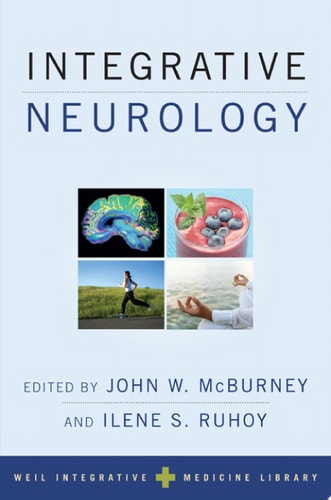
Integrative Neurology (Weil Integrative Medicine Library Book 18)
0
0
As an Amazon Associate and affiliate partner, Menrva Books earns from qualifying purchases. Learn more
Author Description
Dementia, Parkinson's Disease, headache, and neuropathy are all conditions for which narrowly focused medical interventions all too often fall short. The first book in its field, Integrative Neurology synthesizes complementary modalities with state-of-the-art medical treatment to offer a new vision for neurological care. The authors begin by looking inward at the crisis of stress and burnout that confronts all of medicine, but neurology in particular. It goes on to provide a selective yet in-depth review of important topics in neurological practice from the perspective of integrative medicine. Taking an evidence based approach throughout, chapters cover chronic diseases such as Multiple Sclerosis, Dementia, and Parkinson's Disease. The volume also address clinical issues such as headache, traumatic brain injury, navigating the endocannabinoid system and aging, nutrition and stroke, neuropathy, toxins and neurodevelopment, as well as the modalities of Ayurvedic Medicine and acupuncture. Integrative medicine is defined as a healing-oriented medicine that takes account of the whole person (body, mind, and spirit) as well as all aspects of lifestyle. It emphasizes the therapeutic relationship and makes use of appropriate therapies, both conventional and alternative. Series editor Andrew Weil, MD is Professor and Director of the Arizona Center for Integrative Medicine at the University of Arizona. Dr. Weil's program was the first such academic program in the US, and its stated goal is "to combine the best ideas and practice of conventional and alternative medicine into cost effective treatments without embracing alternative practices uncritically."
Menrva's Summary
THE THESIS
How can the integration of complementary modalities with conventional medical practices improve outcomes for patients suffering from complex neurological conditions? Authors Ilene S. Ruhoy and John W. McBurney, drawing on their clinical expertise and the framework of the Weil Integrative Medicine Library, argue that a holistic approach addressing the body, mind, and spirit is necessary to overcome the limitations of narrowly focused neurological interventions. The text synthesizes evidence-based research to provide a comprehensive model for treating chronic neurological diseases and systemic health issues.
THE SCOPE MAP
What You Will Find
- Clinical management strategies for Multiple Sclerosis, Dementia, and Parkinson's Disease.
- Analysis of the endocannabinoid system in relation to aging and neurological health.
- Integration of Ayurvedic Medicine and acupuncture into standard neurological practice.
- Evidence-based protocols for addressing stroke, neuropathy, and traumatic brain injury.
Scope Limits
- The text does not serve as a comprehensive medical encyclopedia for every rare neurological disorder.
- It does not advocate for the replacement of conventional medicine but rather for the selective incorporation of complementary therapies.
THE AUTHORITY PERSPECTIVE
Experts recognize this volume as a foundational text for practitioners seeking to bridge the gap between conventional neurology and integrative care. Readers frequently note the clinical utility of the evidence-based approach provided by the authors.
Page Count:
528
Publication Date:
2020-01-01
Publisher:
Oxford University Press
ISBN-10:
0190051639
ISBN-13:
9780190051631
Health
Allied Health
Massage & Reflexotherapy
Medical
Professional Career & Trade
Neurology
Community Tags
Similar Books