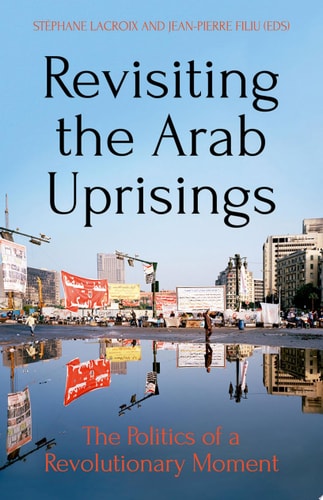
Revisiting the Arab Uprisings
0
0
As an Amazon Associate and affiliate partner, Menrva Books earns from qualifying purchases. Learn more
Author Description
Since 2013, The Middle East Has Experienced A Double Trend Of Chaos And Civil War, On The One Hand, And The Return Of Authoritarianism, On The Other. That Convergence Has Eclipsed The Political Transitions That Occurred In The Countries Whose Regimes Were Toppled In 2011, As If They Were Merely Footnotes To A Narrative That Naturally Led From An Arab Spring To An Arab Winter. This Volume Aims At Rehabilitating Those Transitions, By Considering Them As Expressions Of A Revolutionary Moment Whose Outcome Was Never Pre-determined, But Depended On The Choices Of A Large Range Of Actors. It Brings Together Leading Scholars Of Arab Politics To Adopt A Comparative Approach To A Few Crucial Aspects Of Those Transitions: Constitutional Debates, The Question Of Transitional Justice, The Evolution Of Civil-military Relations, And The Role Of Specific Actors, Both Domestic And International.
Menrva's Summary
THE THESIS
This volume investigates the political transitions following the 2011 Arab uprisings to challenge the narrative that these events inevitably led to regional chaos and authoritarian resurgence. The authors, Jean-Pierre Filiu and Stéphane Lacroix, curate contributions from leading scholars of Arab politics to analyze these transitions as distinct revolutionary moments. By examining the specific choices made by domestic and international actors, the text argues that the outcomes of these uprisings were not pre-determined but shaped by complex political dynamics.
THE SCOPE MAP
What You Will Find
- Comparative analysis of post-2011 political transitions in the Middle East
- Examination of constitutional debates and transitional justice frameworks
- Study of civil-military relations in revolutionary contexts
- Assessment of the influence of domestic and international political actors
Scope Limits
- Does not provide a comprehensive history of every nation involved in the Arab Spring
- Focuses primarily on political and institutional transitions rather than grassroots social movements
THE AUTHORITY PERSPECTIVE
Experts recognize this volume as a significant contribution to the comparative study of Middle Eastern political transitions. Readers frequently note the academic rigor and the analytical depth provided by the diverse range of contributors.
Page Count:
0
Publication Date:
2018-01-01
Publisher:
Oxford University Press
ISBN-10:
0190057939
ISBN-13:
9780190057930
History
Middle Eastern
International relations
Sociology
Community Tags
Similar Books