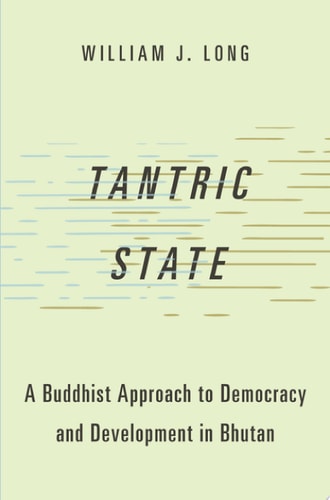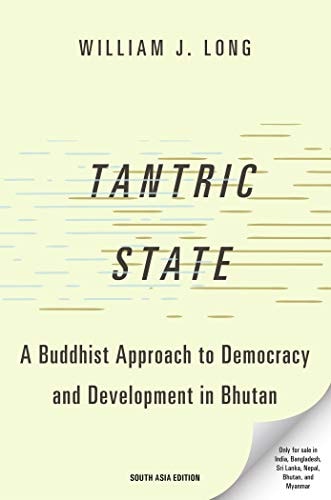
Tantric State: A Buddhist Approach to Democracy and Development in Bhutan
0
0
As an Amazon Associate and affiliate partner, Menrva Books earns from qualifying purchases. Learn more
Author Description
Today, the majority of sovereign states can be described as "democracies" because they possess elected political leadership and some measure of commitment to the protection and promotion of individual rights and equality under law. In the economic realm, most democracies are market-based and are integrated into wider regional and global markets. Virtually all are organized around Western liberal principles and values. For some, these philosophical commitments are indigenous and longstanding, and for others they were imported later, often through colonization. This book asks how democratic governance and economic development differ when founded on Eastern, Buddhist principles, rather than Western, liberal, and Enlightenment values and beliefs.The small, remote country of Bhutan is the only democratic, market-based state that is rooted constitutionally and culturally in Mahayana Buddhist principles and ethics. In this book, William J. Long provides an authentic basis for theoretical and empirical comparison between two distinct models of democracy and development that differ on important, first-order principles. Bhutanese Buddhist and Western liberal concepts of the individual "self," "human nature" and "the pursuit of happiness"-the building blocks of democratic and market-based economic theory-differ profoundly. Because the two approaches-liberal and Buddhist-are based on distinctive philosophical traditions, this comparison elucidates new questions, frames of inquiry, and alternative understandings of democracy and development.The book describes how democratic political institutions and markets emerged and how they function in Bhutan, demonstrating how, in real-world terms, Bhutan organizes and operates a political and economic system consistent with its Buddhist worldview. It considers the nature of Bhutan's unique political institutions and its economic touchstone, the pursuit of "Gross National Happiness (GNH)," rather than Gross National Product, as its orderin
Menrva's Summary
THE THESIS
This book investigates how democratic governance and economic development function when grounded in Eastern, Buddhist principles rather than Western, liberal, and Enlightenment values. William J. Long, an expert in international relations and political theory, utilizes the case study of Bhutan to contrast these two distinct philosophical frameworks. He examines how fundamental concepts such as the individual self, human nature, and the pursuit of happiness are interpreted differently within a Mahayana Buddhist context compared to Western liberal traditions.
THE SCOPE MAP
What You Will Find
- A comparative analysis of Western liberal democracy versus Bhutanese Buddhist political and economic models.
- An exploration of the concept of Gross National Happiness (GNH) as an alternative to Gross National Product.
- Examination of how Buddhist ethics influence the structure of political institutions and market operations.
Scope Limits
- The analysis is primarily focused on the specific case of Bhutan and may not be broadly applicable to all Buddhist-majority nations.
- The text does not provide an exhaustive history of Bhutanese political evolution, focusing instead on the intersection of philosophy and governance.
THE AUTHORITY PERSPECTIVE
Scholars and political analysts recognize this work as a significant contribution to the study of non-Western democratic models. Readers frequently note the academic density of the prose, which provides a rigorous intellectual framework for understanding the unique intersection of spirituality and statecraft in Bhutan.
Page Count:
0
Publication Date:
1900-01-01
Publisher:
Oxford University Press Oup
ISBN-10:
0190058749
ISBN-13:
9780190058746
Democracy
Bhutan
International relations
Community Tags
Similar Books