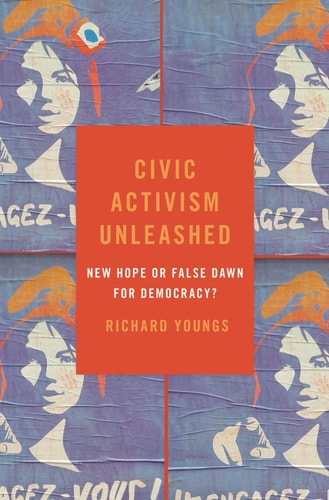
Civic Activism Unleashed: New Hope or False Dawn for Democracy?
0
0
As an Amazon Associate and affiliate partner, Menrva Books earns from qualifying purchases. Learn more
Author Description
One of the signal events in global politics in the last decade has been the transformation of political and civic activism. Not only is the new activism qualitatively different in character from what it was in 2000; its intensity and frequency have dramatically increased. Activists are developing a new type of civic movement, applying innovative forms of direct action against governments and often operating without leaders or even any well-defined set of aims.In Civic Activism Unleashed, Carnegie scholar Richard Youngs examines the changing shape of contemporary civic activism. He shows how the emerging civic activism has important implications for the whole concept of civil society-and for the relationship between citizens, political institutions, and states. Youngs contends that the rise and spread of these new forms of direct-action civic activism, and the way the trend has driven the dramatic events in global politics in recent years, requires us to update our understanding of what civil society actually is and which types of organizations are in its vanguard. He further looks at the global impact of recent civic activism and offers a set of variables to help explain cases of success and failure. Youngs' larger aim is to explore in depth the new forms of civic activism that are emerging around the world and assess how they differ from more established practices of civil society activity.Theoretically ambitious and global in scope, Civic Activism Unleashed forces us to reconsider the nature of contemporary social and civic activism and how it is reshaping contentious politics in countries across the world.
Menrva's Summary
THE THESIS
Does the recent surge in decentralized, direct-action civic activism represent a sustainable evolution of democratic engagement or a destabilizing force for political institutions? Richard Youngs, a senior fellow at the Carnegie Endowment for International Peace, utilizes his extensive background in international relations and democratization to analyze the shifting landscape of global protest. He argues that the traditional understanding of civil society is insufficient to capture the leaderless, high-intensity movements currently challenging state authority. By synthesizing global case studies, Youngs provides a framework for evaluating the efficacy and long-term impact of these modern civic movements on democratic governance.
THE SCOPE MAP
What You Will Find
- Comparative analysis of leaderless movements versus traditional civil society organizations.
- A set of variables designed to measure the success and failure of direct-action campaigns.
- Examination of the shifting relationship between citizens, political institutions, and the state.
Scope Limits
- The text does not provide a comprehensive history of 20th-century protest movements.
- It does not offer a predictive model for specific future political outcomes in individual nations.
THE AUTHORITY PERSPECTIVE
Experts in political science recognize this work as a significant contribution to the study of contemporary contentious politics. Readers frequently note the academic rigor of the analysis, which provides a necessary update to traditional theories of civil society.
Page Count:
192
Publication Date:
2019-01-31
Publisher:
Oxford University Press
ISBN-10:
0190931701
ISBN-13:
9780190931704
Activism
Social Media
Democracy
Civil society
Sociology
International relations
Community Tags
Similar Books