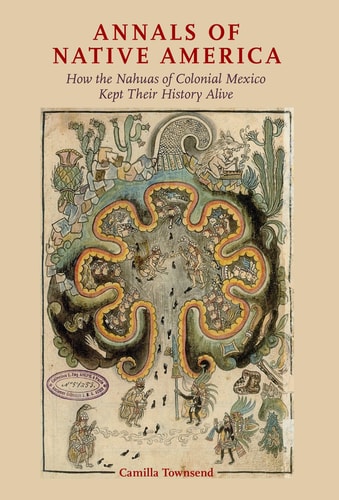
Annals of Native America: How the Nahuas of Colonial Mexico Kept Their History Alive
0
0
As an Amazon Associate and affiliate partner, Menrva Books earns from qualifying purchases. Learn more
Author Description
For many generations, the Nahuas of Mexico maintained their tradition of the xiuhpohualli. or "year counts," telling and performing their history around communal firesides so that the memory of it would not be lost. When the Spaniards came, young Nahuas took the Roman letters taught to them by the friars and used the new alphabet to record historical performances by elders. Between them, they wrote hundreds of pages, which circulated widely within their communities. Over the next century and a half, their descendants copied and recopied these texts, sometimes embellishing, sometimes extracting, and often expanding them chronologically.The annals, as they have usually been called, were written not only by Indians but also for Indians, without regard to European interests. As such they are rare and inordinately valuable texts. They have often been assumed to be both largely anonymous and at least partially inscrutable to modern ears. In this work, Nahuatl scholar Camilla Townsend reveals the authors of most of the texts, restores them to their proper contexts, and makes sense of long misunderstood documents. She follows a remarkable chain of Nahua historians, generation by generation, exploring who they were, what they wrote, and why they wrote it. Sometimes they conceived of their work as a political act, reinstating bonds between communities, or between past, present, and future generations. Sometimes they conceived of it largely as art and delighted in offering language that was beautiful or startling or humorous.Annals of Native America brings together, for the first time, samples of their many creations to offer a heretofore obscured history of the Nahuas and an alternate perspective on the Conquest and its aftermath.
Menrva's Summary
THE THESIS
This work investigates how Nahua historians in colonial Mexico utilized the Roman alphabet to preserve their indigenous cultural memory and historical identity against the backdrop of Spanish colonization. Camilla Townsend, a specialist in Nahuatl language and history, analyzes a collection of indigenous annals written between the sixteenth and seventeenth centuries. She argues that these texts were not merely passive records but active, intentional historical projects created by Nahuas for a Nahua audience to maintain communal bonds and artistic expression.
THE SCOPE MAP
What You Will Find
- Analysis of the xiuhpohualli or year counts tradition
- Examination of the transition from oral performance to alphabetic writing
- Biographical reconstruction of specific Nahua historians across generations
- Contextualization of the annals as political and artistic acts
Scope Limits
- Does not provide a comprehensive military history of the Spanish Conquest
- Does not cover the entirety of Mesoamerican indigenous writing systems outside the Nahua tradition
THE AUTHORITY PERSPECTIVE
Scholars and historians recognize this text as a significant contribution to the field of ethnohistory for its focus on indigenous agency. Readers frequently note the academic density of the prose, which provides a rigorous examination of primary source documents.
Page Count:
340
Publication Date:
2019-07-01
Publisher:
Oxford University Press
ISBN-10:
0190055529
ISBN-13:
9780190055523
History
Politics
Native American
American History
History of the Americas
Nahuas
Ethnic Studies
New Used & Rental Textbooks
Mexico
Nahuatl
Historiography
Americas
Indians of Mexico
Community Tags
Similar Books