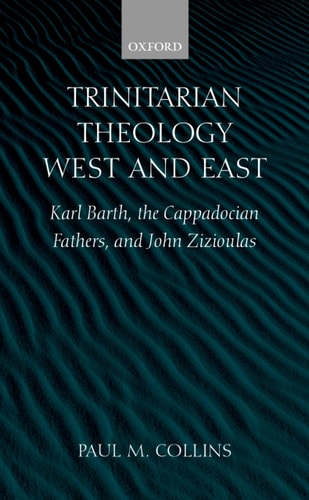
Trinitarian Theology West and East: Karl Barth, the Cappadocian Fathers, and John Zizioulas
0
0
As an Amazon Associate and affiliate partner, Menrva Books earns from qualifying purchases. Learn more
Author Description
This book is a unique contribution to the dialogue between the traditions of Eastern and Western Christian thought. Through the writings of Karl Barth and John Zizioulas, Collins creates an ecumenical dialogue about Trinitarian thought. During the last decade the doctrine of the Trinity and the concept of koinonia have been much in evidence in ecumenical contexts. Collins looks beyond the growing ecumenical consensus to examine the origin for the basis for the consensus, and suggests that it is possible to root it in Western thought as well as in Eastern Orthodoxy.
Menrva's Summary
THE THESIS
This book investigates whether the contemporary ecumenical consensus on the doctrine of the Trinity and the concept of koinonia can be grounded in both Western and Eastern theological traditions. Paul M. Collins, a scholar of systematic theology, utilizes the writings of Karl Barth and John Zizioulas to bridge the divide between Western and Eastern Christian thought. By analyzing these two figures, Collins constructs a framework that seeks to reconcile Western theological developments with the insights of the Cappadocian Fathers. The work argues that a shared foundation for Trinitarian understanding is not only possible but necessary for ongoing ecumenical dialogue.
THE SCOPE MAP
What You Will Find
- Comparative analysis of Western and Eastern Trinitarian doctrines
- Examination of the theological contributions of the Cappadocian Fathers
- Critical study of Karl Barth's dialectical theology in relation to Eastern Orthodoxy
- Exploration of the concept of koinonia within modern ecumenical contexts
THE AUTHORITY PERSPECTIVE
Scholars and theologians frequently cite this work as a significant contribution to comparative systematic theology. Experts highlight the text's ability to navigate complex historical and dogmatic differences between traditions with academic precision.
Page Count:
272
Publication Date:
2001-10-18
Publisher:
Oxford University Press
ISBN-10:
0198270321
ISBN-13:
9780198270324
Philosophy
Religion
Trinity
Theology
Christianity
Community Tags
Similar Books